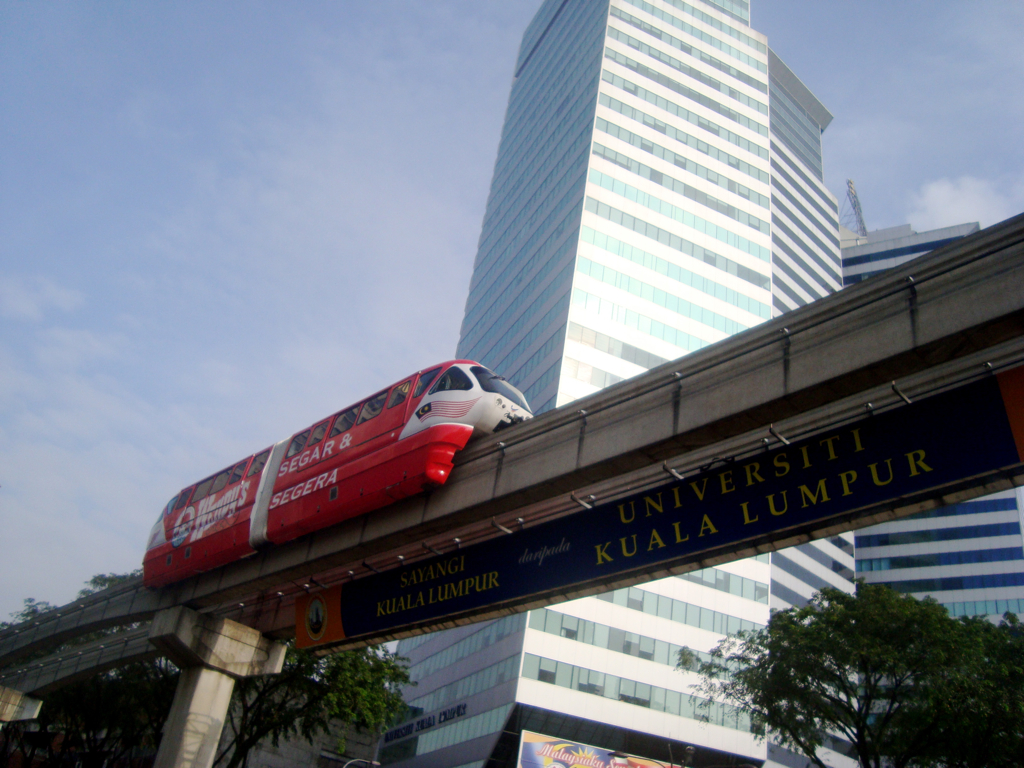
Showing posts with label Public Transportation. Show all posts

Thursday, 15 March 2012

THE ROLE OF URBAN GOVERNANCE TOWARDS AN INTEGRATED REGULATORY APPROACH FOR THE PUBLIC TRANSPORTATION NETWORK IN MALAYSIA’S CITIES

The key roles and responsibilities of an urban transport authority should entail; budgeting and funding, integrated transport planning, standards development, fares definition and economic regulation, tendering and licensing, performance monitoring, standards enforcement, infrastructure ownership and management, ticketing and fares collection and traffic management. What applies to Malaysia? Three areas for consideration:
a. Is there a need for an integrated Transport Authority to regulate and manage the urban transport sector in the major agglomerations?
b. Are urban public transport service offerings developed based on an integrated urban and transport planning approach? Are urban transport services closely integrated to provide a seamless service proposition?
c. Is the performance management of the service providers / operators consistent, transparent and comprehensive? What sanctions are appropriate for non-performing operators?

Regulatory fragmentation has been frequently indentified as the root cause for Malaysia’s public transportation system woes. Institutional inefficiencies, lack of integration and absence of key functions are the three identified areas of regulatory fragmentation in governance that normally leads to such woes. The result will normally leave a country or city with a myriad of problems such as underdeveloped public transportation, high pollution levels, congestion issues and low safety levels. The cited examples of 6 densely populated cities i.e. London, Singapore, Paris, Hong Kong, Auckland and Berlin as places to learn from because of their quality reputation in transportation governance. In applying a comprehensive transport governance framework (policy, planning & regulation, operations and enforcement) to the transport authorities of the six cities, six valuable lessons were learnt. These consisted of:

a. Separation of regulation from operations
Regulatory and operations functions are separate with the planning/regulating body having no interest in the ongoing operations. Such operations could be performed by either public or private sector operators with the infrastructure and rolling stock being owned by the regulating body.

b. Planning integration
All planning and regulatory functions for all public transport modes that are undertaken by one organisation that facilitates integration. It was discovered that intermodal integration is ensured at three levels which are; capacity & route planning, infrastructure planning and fare planning. Transport planning is also highly integrated with urban development.

c. Functions-based structure
The transport authority adopts a function-based organisational structure to ensure integrated planning across all modes of public transport and to have a direct link with the public transport operators.

d. Budgeting and funding
Authority is typically responsible for collecting subsidies from government and allocating them to the public transport operators. The allocation is a key in managing the sector and ensuring coordination / integration. In some cases, funds are allocated by the transport authority to the local authorities for infrastructure projects like roads.

e. Active monitoring
The performance of public transport operators are monitored and evaluated against defined KPIs covering operations and environmental areas. The service contracts provides sanctions, including termination, in cases of non compliance.

f. Industry consolidation
The private sector would be consolidation into cohesive organisations that are generally done by the authorities. This move is to ensure effective regulation and to scale up investments which otherwise might be difficult to source from individuals and small operators.

Monday, 20 February 2012

THE ROLE OF EFFICIENT URBAN GOVERNANCE TO PROMOTE THE INCREASING PUBLIC TRANSPORT UTILISATION

The availability and improvement of public transportation should be looked upon as a consumer right of citizens. Unfortunately, citizens tend to suffer from the uncoordinated, ill planned and profit driven public transport projects that have been developed by private concerns. An example would be the failure to connect the LRT and Monorail lines in KL Sentral itself that brings about such inconvenience to would be users. ‘Sustainability’ is the key word in increasing the utilisation of public transport and this is undertaken by finding out what the general public would like and making sure it is delivered and maintained. The growing success of RAPID Penang has been brought about by its efficiency that encapsulates:
a. Services (affordable, accessible, frequent, conducive, informative with well trained personnel);
b. Enforcement (relevant authorities take responsibility for monitoring and issuing of licences);
c. Hardware (vehicles with good levels of comfort, safety and cleanliness, GPS);
d. Infrastructure (improved road system which includes bus lanes, developing/improving the bus terminals and bus & taxi stops)

The bus operations of most capital cities in developed countries have been reformed via the introduction of the ‘Hub-and-Spoke’ concept which RAPID Penang will emulate once more infrastructure becomes available. The concept entails shortened travelling distances for buses that will increase their frequency and lower the waiting time despite the transfers. RAPID Penang plans to increase the number of buses from 150 to 350 with the goal of achieving a 70:30 (private: public transportation) usage by 2010. As much has been discussed and covered regarding the various problems being faced by Malaysia’s public transport, he concentrated on short and long term recommendations to alleviate and eventually overcome these problems:

The short term steps:
a. Focusing on low/medium income groups and low vehicle ownership settlement corridors to achieve a higher modal split;
b. Lower priority on high-income groups, low density and high vehicle ownership areas as these places would/can be more effectively served by taxis;
c. Choosing suitable vehicles for feeder services with routes penetrating into densely populated settlements;
d. Review and improving the facilities and amenities (bus stop design, waiting comfort, lighting, etc) on priority routes

The long term steps:
a. Policy and strategy in restraining private vehicle usage in the urban centre;
b. Priority on bus operations and enforcement;
c. Balancing land use planning and development

With all the research and recommendations garnered on the issue over the years there should be little or no room for trial and error. An introduction on Department of Railways (DOR) that reports to the Ministry of Transport and is governed by the Railways Act 1991 & Regulations. The duties & functions of the DOR are as follows:
a. Regulating railway operations and services;
b. Prescribing minimal safety standards for railway operations;
c. Prescribing registration/minimal qualification for railway officials;
d. Promoting interest of users of railway facilities/ services (rates, standards, quality, etc);
e. Promoting expansion/improvement of railway systems/facilities/services

In his opinion on the matter on increasing public transport utilisation, there are several ways of achieving this. First and foremost, is to continuously expand the railway network as the backbone of public transport that is complemented with adequate bus line and bus feeder services. The availability of an integrated, accessible and seamless rail network is also needed that possesses a good level of capacity, comfort and reliability. Added to this, will be the need for a common ticketing system and increase in parking space for private vehicle users who would/wish to use public transport like the railway network.

Tuesday, 31 January 2012

THE ROLE OF EFFICIENT URBAN GOVERNENCE TOWARDS A UNIFIED AND SEAMLESS PUBLIC TRANSPORT NETWORK

When discussing the issue of public transportation (urban, suburban, etc), the topic will always encapsulate the various modes of transportation that are either public or privately owned. When making comparisons between the two that provide almost similar services, the latter has always been considered as having the advantage by providing for example; door to door travel. In his view, in order for the public transportation services (particularly in urban areas) to gain the trust of the public, a seamless and integrated public transport network must be made available. To be ‘seamless’ is to provide almost door to door travel while being ‘integrated’ involves both tangible (such as planning) and intangible (such as sustainability) matters.

          The question of Malaysia’s public transportation system must be viewed as a matter of considerable urgency that needs to be addressed as soon as possible. As the country strengthens economically, its prosperity and population grows as well thus increasing the number of privately owned modes of transportation i.e. motorcycle, car, van, etc. Today’s traffic congestion (particularly in urban areas) is only temporarily alleviated by otherwise ad hoc and uncoordinated transportation centric projects (like highways) undertaken by various private and public bodies. In the meantime, the nation’s public transportation system bears the brunt of these projects that give would be users limited choices. the development of land especially in urban areas like KL must take into consideration the convenience of the general public. This is done by developing a ‘humane’ city where commuters of a seamless and integrated public transport network are given priority (instead of private vehicle users) in getting to their destinations without much difficulty.

       When touching on the inter relationship between land use and public transport, both aspects do complement each other. Public transport planning must not be done in isolation and should be highly integrated with land use planning/urban development. This is due to the fact that high population density has a direct impact on the capacity of the public transport network. Developing public transport in national strategies goes as far back as 1975 with the recent Ninth Malaysia Plan requiring an integrated and efficient public transport system as part of promoting sustainable human settlement development. Another example is the Principles of National Physical Plan (NPP) where it favours public transport over private vehicle use for inter-urban and intra-city movement. She had also mentioned that a land use planning tool called the Transit Oriented Development (TOD) is used for a mixed-use residential or commercial area designed to maximise access to public transport. This would entail public transport being located in the centre of a relatively high-density development area with progressively lower-density development spreading outwards from it. With regards to the ongoing land use in KL, TOD proposals are always included in its potential development. State Structure Plans (SP) and District Local Plans (LP) also include the need for public transport.

        From this point of view, there is a need to address certain matters in order to achieve the goal of a seamless and integrated public transport network:
a. A lack of clear ownership (as regulations and operations have different owners);
b. The need for an Integrated Transport Authority/Public Transport Commission;
c. Consolidation;
d. The implementation of plans already decided upon;
e. The need for enforcement;
f. Local authority involvement (public transport plans and budget allocation); and
g. Increasing local authority’s role in public transport planning to complement the Integrated Transport Authority/ Public Transport Commission

According a train/bus journey would entail three segments;
a. Access to Service (home to train station/bus stop);
b. Mainline Journey (using a train or bus to the next train station/bus stop); and
c. Connectivity for Dispersal (train station/bus stop to the work place)

         Presently, the overall timing when using the bus services within the Klang Valley (from urban to suburban destinations and visa versa) is between one to two hours. Bus stops are generally overlooked or play a less an important role when public transport planning is concerned. Bus transportation particularly bus stops can play an important role in providing a seamless and integrated public transport network. Examples of bus stops located in Curitiba in Brazil, Nantes and Strasbourg in France and Zurich in Switzerland shows the emphasis of comfortable and sheltered bus stops located very close to bus and train service routes. Accessibility between Malaysia rail and bus service routes leaves much to be desired. There is a need to be ‘people orientated’ when public transport planning is being carried out in Malaysia. The development in Malaysia always gave emphasis to vehicle routes, buildings and other utilities and left out the pedestrian factor i.e. walkways but this is gradually changing. It is estimated that around 2.5 million people commute in and out of KL on a working day. Around 50 to 70% of these commuters walk to their destinations for the last segment of their journey. The following in order to meet the goal for a seamless and integrated public transport network:
a. A shortened journey time;
b. Accessibility to service;
c. Minimising transfer between destinations;
d. Reduce waiting times;
e. A smooth dispersal flow at destination;
f. Affordable cost of travel; and
g. Common integrated ticketing system

The concentrate on the stagnation and progress being experienced in enhancing Malaysia’s public transport and how to move ahead in making it a reality. The goal of a seamless and integrated public transport network has been compounded by a number of significant problems being faced:
a. Poor planning of transport, services & development;
b. Uncoordinated and incomplete planning;
c. Lack of timely investment in public transportation;
d. Overcrowding and network breakdown;
e. KTM Crisis (a shortage of trains while the number of commuters grows);
f. Existing networks have significant missing links and are not properly integrated; and
g. Many options for services i.e. buses that are deemed unreliable, inaccessible and inconvenient for many

On the aspect of organisation and regulation, the significant problems faced are:
a. Lack of interest/authority/ability/willingness to enforce regulations;
b. Incomplete understanding of what public transport can offer to a community;
c. Focusing on the lower-income group that don’t necessarily take public transport;
d. Operator driven competition does not help the public transportation industry; and
e. Operators may sacrifice quality, service, mobility, safety, rights of workers, etc.

Progress has also been made in some areas such as the establishment of RAPID Penang where the number of users of the service is increasing. In order to meet the goal for a seamless and integrated public transport network:
a. Parliamentary Select Committee;
b. Public Land Transport Commission;
- introducing and maintaining National Standards
- integrated planning across Malaysia
c. Local/Regional Public Transport Authorities;
- Regional and Local Planning
- Control of routes, fares, assets
- Operators under contract to provide services
d. Encouraging and using public feedback

Saturday, 7 January 2012

THE ROLE OF GOVERNMENT TO INTEGRATE THE PUBLIC TRANSPORT NETWORK IN MALAYSIA’S CITIES

The government is acutely aware of the serious short comings of the country’s public transportation system. Only 16% of residents in the Klang Valley use public transportation where as the majority uses personal transportation. This is due to the fact that the ratio of rail track to population size is just 19km per a million of population, that covers only certain parts of Klang Valley. Klang Valley’s three existing rail systems and stage buses are already overcrowded with 260,000 commuters during morning rush hour. A special task force headed by the Ministry of Transport has already been set up to make the Klang Valley publictransportation system more attractive. The taskforce’s goal is to increase the number of users from 16%to 25% by 2012. Urban areas with high population density such as Penang and Johor Bahru are also being targeted with a similar drive but with yet-to-be-mentioned timeframes. The government’s goal is create a world class public transportation system through enhancing its service, capacity, coverage and connectivity. Special emphasise will be given to rail transportation as the backbone to planned improvement of urban public transportation. Initial moves by the government is already underway with the planned purchase of 10 sets of electric multiple units (EMU) for Keretapi Tanah Melayu and 10 new trains for Kelana Jaya’s Light Rail Transport (LRT) line. The existing LRT lines will also be extended to 32km of track per million of population by 2012. Outside of the Klang Valley, certain segments of the ongoing electric double tracking project for KTM are nearing completion.

PEOPLE AROUND ME..FAMILY AND FRIENDS.

PEOPLE AROUND ME..FAMILY AND FRIENDS.
To my Wife, Zulaini, my sons Zulazlan, Zulazman, Zulazmir, Zulazmin dan my daughter, Nuris Zulazlin...I love you all..thank you being with me

CIRCLE OF FRIENDS... KUALA LUMPUR PROJECT OFFICE

CIRCLE OF FRIENDS... KUALA LUMPUR PROJECT OFFICE
Thank you guys...for your support and encouragement

2007 / 2008 METHODOLOGY AND QUALITATIVE RESEARCH COURSE FOR PHD CANDIDATES

2007 / 2008 METHODOLOGY AND QUALITATIVE RESEARCH COURSE FOR PHD CANDIDATES
My new friends during my course in INTAN 9 Jan -2 Mac 2007

KUALA LUMPUR PROJECT OFFICE, JOURNEY TO MOUNT OF KINABALU SABAH 21-22 JANUARY 2006

KUALA LUMPUR PROJECT OFFICE, JOURNEY TO MOUNT OF KINABALU SABAH 21-22 JANUARY 2006
WE CAME, WE SAW, WE CONQUERED 4095.2 METER ABOVE SEA LEVEL

How are you, guys? Where you are now?

FOOD CLOCK