Showing posts with label Competitiveness of City. Show all posts

Sunday, 19 December 2010

MY PHD ABSTRACT


THE EFFICIENT URBAN GOVERNANCE TO ENHANCE ECONOMY COMPETITIVENESS IN KUALA LUMPUR CITY-REGION

ABSTRACT

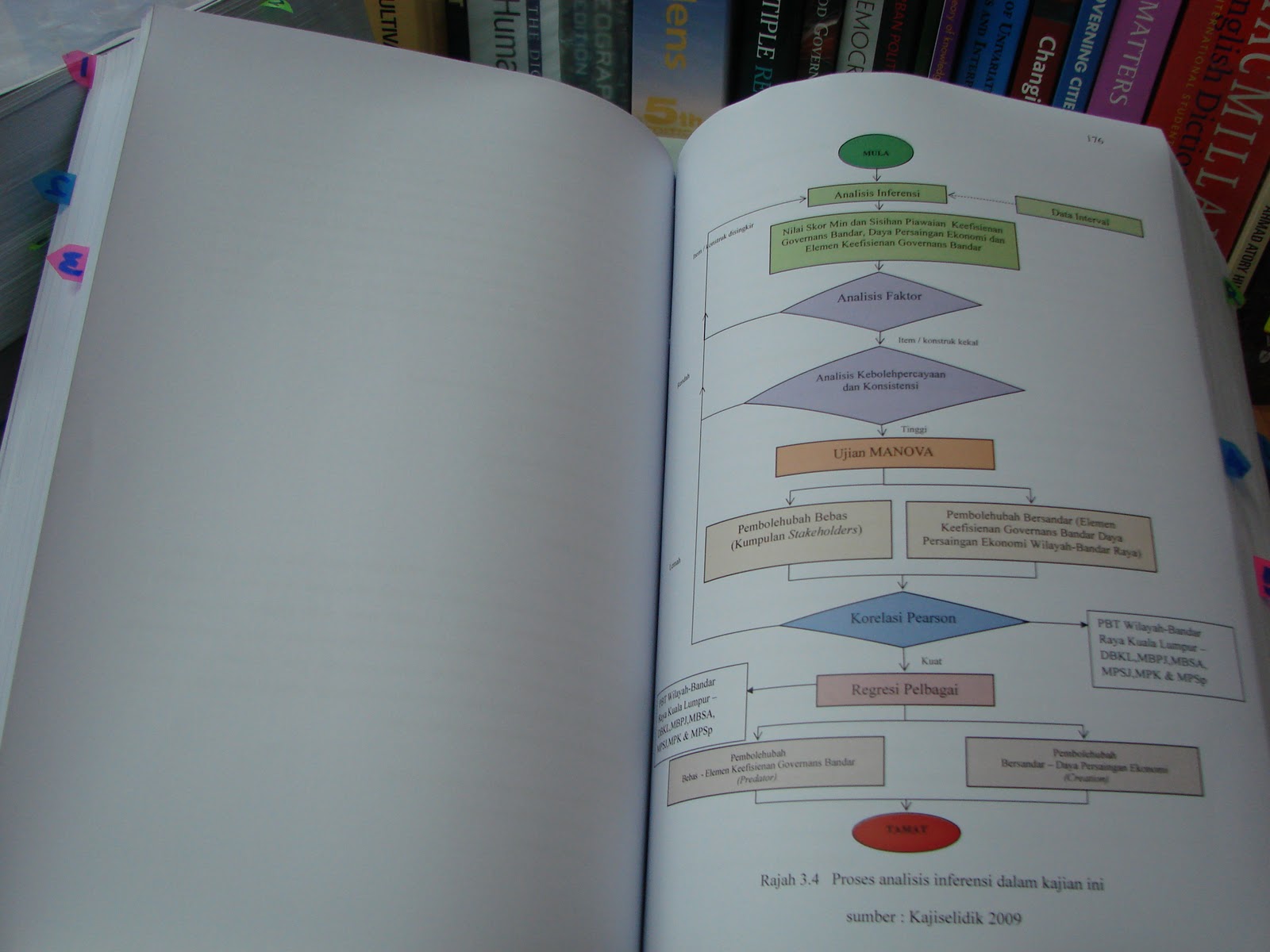
In the context of globalization, urban governance is increasingly faced with complex challenges. The Local Authority (LA) as the governance institution is ensconced in bureaucracy is not spared from the issues of inefficiency in dealing with stakeholders. This issue became the main research question to be addressed in this thesis. Inefficient urban governance can affect the economic competitiveness in the city-region. This thesis investigates the extent how elements of efficient urban governance (EUG) can contribute to the enhancement of economic competitiveness in city-region (ECCR) and which of these elements can affect ECCR? This study aims to develop a clear understanding of the role of EUG at LA level, and its relationship with the ECCR. In the case of Kuala Lumpur city-region, the study also investigates which LA has achieved the best position in EUG. The theoretical framework of the KGB in city-region has been used to investigate the relationship between EUG and ECCR. The studies focus mainly to the stakeholders of Kuala Lumpur city-region on their perception in the implementation of EUG by LA. This involved 6 main LAs such as DBKL, MBPJ, MBSA, MPSJ, MPK and MPSp with 315 respondents representing various stakeholders. One of the findings in inferential data analysis shows that 10 elements of EUG contributed 89.6 percent to the enhancement of ECCR. This multiple regression analysis also shows the significant relationship between EUG with economic competitiveness in Kuala Lumpur city-region. However, only five elements are the best predictors to the ECCR such as administration and the effectiveness of LA services, public feedback, a strategic vision, transparency and equality. Meanwhile, analysis of the indicators measuring EUG in LAs show that MBPJ achieved the highest score of 0.75 compared with five other LAs. Generally the results indicate that LA no longer plays the role of a government body that provides services and infrastructure only. In fact the results suggest that LA should focus on urban governance to enhance efficiency in providing services to stakeholders.


KEEFISIENAN GOVERNANS BANDAR DALAM MENINGKATKAN DAYA PERSAINGAN EKONOMI WILAYAH-BANDAR RAYA KUALA LUMPUR

ABSTRAK

Dalam konteks globalisasi, governans bandar berdepan dengan pelbagai cabaran yang semakin kompleks. Peranan pihak berkuasa tempatan (PBT) sebagai institusi governans sentiasa dikaitkan dengan pelbagai karenah birokrasi dalam penyediaan perkhidmatan yang tidak efisien yang menimbulkan masalah kepada stakeholders. Isu ini menjadi persoalan penyelidikan utama dalam tesis ini. Ketidakefisienan governans bandar boleh menjejaskan daya saing sesebuah wilayah-bandar raya. Sejauhmanakah elemen keefisienan governans bandar (KGB) mempengaruhi daya persaingan ekonomi (DPE) sesebuah wilayah-bandar raya dan elemen manakah yang mempengaruhinya? Kajian ini bertujuan membentuk satu pemahaman yang jelas mengenai peranan KGB di peringkat PBT dan hubungkaitnya dengan peningkatan DPE di wilayah-bandar raya. Berdasarkan kes wilayah-bandar raya Kuala Lumpur, kajian ini juga mengenalpasti PBT yang mempunyai kedudukan KGB yang paling baik. Penyelidikan ini berdasarkan kepada kerangka teoritikal KGB wilayah-bandar raya untuk menilai hubungkait dengan DPE. Kajian ini juga dijalankan berdasarkan persepsi stakeholders wilayah-bandar raya Kuala Lumpur mengenai KGB yang diamalkan oleh PBT. Ini melibatkan 6 PBT utama iaitu DBKL, MBPJ, MBSA, MPSJ, MPK dan MPSp dengan 315 responden yang mewakili beberapa stakeholders. Antara penemuan utama analisis data inferensi kajian ini, menunjukkan bahawa 10 elemen KGB menyumbang sebanyak 89.6 peratus kepada DPE di wilayah-bandar raya Kuala Lumpur. Keputusan analisis regresi pelbagai ini menunjukkan terdapat hubungan signifikan antara KGB dengan DPE wilayah-bandar raya Kuala Lumpur. Hanya 5 elemen sahaja yang menjadi peramal terbaik kepada DPE wilayah-bandar raya Kuala Lumpur iaitu keberkesanan pentadbiran dan perkhidmatan PBT, maklumbalas awam, wawasan strategik, ketelusan dan kesamarataan. Analisis indeks penunjuk pengukuran KGB PBT di wilayah-bandar raya Kuala Lumpur menunjukkan MBPJ mencapai skor tertinggi iaitu 0.75 berbanding dengan lima PBT yang lain. Keputusan kajian juga mendapati peranan PBT tidak lagi dianggap sebagai badan kerajaan yang memberi perkhidmatan dan menyediakan infrastruktur semata-mata. PBT sepatutnya lebih memberi tumpuan kepada governans bandar untuk meningkatkan keefisienan dalam memberi perkhidmatan kepada stakeholders.

Friday, 17 December 2010

16 DECEMBER 2010 MY SUBMISSION DAY FOR 7 COPIES OF DRAFT FINAL PHD THESIS

THIS IS IT....my submission day for 7 copies of my draft final thesis to Deanery Office Faculty of Social Sciences and Humanities (FSSK). I have been informed by an officer of School of Social, Development and the Environment (PPSPP) that my thesis abstract  notice application have been tabled and approved in FSSK meeting on 1 December 2010. However, my Dean FSSK will submit and table to UKM Senate on January 2011 for the approval of external and internal examiners. I hope the Senate Committee will agree with the names suggested by my supervisors and PPSPP Chairman.

Unfortunately until today they did not reveal any name who are my examiners? It is secret, just wait and see. If the Senate approved, FSSK will submit a copy of my thesis to the examiners for their reading, checking, verifying and justifying the quality of my thesis at least one month. If the Senate not approved the names of the examiners, PPSPP and FSSK will find other examiners and table again to FSSK and UKM Senate Meeting in February 2011. That's mean I will sit for my viva presentation in May 2011.

I hope and pray to Allah  that I can sit for my viva presentation end of February or March 2011. Wish me for the best.


Thursday, 16 December 2010

WHY GREATER KUALA LUMPUR NOT KUALA LUMPUR CITY-REGION?

The aspiration for Greater Kuala Lumpur/Klang Valley (Greater KL/KV) is to drive rapid growth parallel with upgrading the city's liveability, according to the Economic Transformation Programme (ETP)'s A Roadmap for Malaysia. For this National Key Economic Area (NKEA), the Greater KL/KV extends beyond the boundaries of Kuala Lumpur. It is defined as an area covered by 10 municipalities, each governed by local authorities - Kuala Lumpur City Council (DBKL), Perbadanan Putrajaya, Shah Alam City Council (MBSA), Petaling Jaya City Council (MBPJ), Klang Municipal Council (MPK), Kajang Municipal Council, Subang Jaya Municipal Council (MPSJ), Selayang Municipal Council, Ampang Jaya Municipal Council (MPAJ) and Sepang District Council.

In 2010, the Greater KL/KV population was estimated at six million and it contributed about RM263 billion to the nation's Gross National Income (GNI), proving that Greater KL/KV was indeed the engine of the nation's economic growth and hence designated as a NKEA. Greater KL/KV is a unique NKEA as it has a geographical focus rather than the industry focus of the other 11 NKEA's. According to the ETP, Greater KL/KV was selected as a NKEA to reflect four important dynamics, the first one -- that urbanization is a driver of GNI growth, where urbanization was one of the most important drivers of economic growth in any country.

Secondly, the Primary City Matters Most -- that Greater KL/KV dominates Malaysia's urban economy and by a large margin and over the next decade, Greater KL/KV was targeted to grow in population by five percent per year and achieve GNI growth of 10 per cent a year. The third dynamics is that Urban Productivity Does Matter -- that the challenge for Greater KL/KV was to harness the power of urbanization while shaping it to maximise urban productivity to simultaneously pursue efficiency and liveability. Finally a great city needs to be a liveable city -- because while urbanising intensively, Greater KL/KV must also focus on improving liveability and among challenges for Greater KL/KV according to the ETP are stiff competition from neighbouring cities because liveability lags compared to many other Asian cities, public transport remains inadequate and natural assets remain untapped.

ETP has also outlined nine Entry Point Projects (EPP) as pivotal towards achieving the aspiration by 2020 and the economic aspirations for Greater KL/KV was to raise its GNI contribution by 2.5 times, from RM258 billion to approximately RM650 billion per year. The EPP's aim is to attract 100 of the world's most dynamic companies within priority sectors, attracting the right mix of internal and external talent and connecting to Singapore via a high speed rail system. Other EPP are to build an integrated urban mass rapid transit system, revitalizing the Klang River into a heritage and commercial centre, greening greater KL/KV to ensure every resident enjoys sufficient green space, creating iconic places and attractions, creating a comprehensive pedestrian network and developing an efficient solid waste management ecosystem.The successful implementation of the nine EPP will lead to additional business opportunities within Greater KL/KV that will continue to enhance Greater KL/KV's liveability and generate incremental GNI.

Greater KL/KV will need to house one million new residents by 2020, and the current projected housing supply was expected to be sufficient to meet demand.Since the challenge of Greater KL/KV NKEA is a monumental one, it will require a significant amount of funding and that will be achieved via a public-private partnership model. Across the 12 NKEA, Greater KL/KV has the largest public sector funding requirement of RM58 billion or 34 per cent of the total investment requirement and for all the nine EPP, a detailed implementation plan has been developed. There are only three roles above the EPP, the Prime Minister as ultimate sponsor, a Greater KL/KV Steering Committee and a Greater KL/KV Corporation that would act as Secretariat to the Steering Committee. The Greater KL/KV aspiration can be summarized as 20-20 by 2020 --- that is, to be the only city that simultaneously achieves a top 20 ranking in city economic growth as defined by city gross domestic product growth rates while being among the global top-20 most liveable cities by 2020. The KL/KV will pursue both growth and liveability

sources :  Economic Transformation Programme Report by Performance Management and Delivery Unit (PEMANDU), Prime Minister's Department, 2010 and BERNAMA, 2010
 
Comments :
In my opinion the terminology of Greater Kuala Lumpur has been adopted from the term of Greater London which had been used well before 1965. Particularly to refer to the area covered by the Metropolitan Police District (such as in the 1901 census), the area of the Metropolitan Water Board (favoured by the London County Council for statistics), the London Passenger Transport Area. The area defined by the Registrar General as the Greater London Conurbation. The administrative area was officially created in 1965 and covers the City of London, including Middle Temple and Inner Temple, and the 32 London boroughs (including the City of Westminster). It covers 1572 km2 (607 square miles) and had a 2006 mid-year estimated population of 7,512,400.

According to Tewdwr-Jones and McNeill (2000), the term ‘city-region’ has been in use since about 1950 by urbanists, economists and landuse planners and refers to a strategic and political level of administration and policy-making, extending beyond the administrative boundaries of single urban local government authorities to include urban and/or semi-urban hinterlands. This definition includes a range of institutions and agencies representing local and regional governance that possess an interest in urban and/or economic development matters that, together form a strategic level of policy-making intended to formulate or implement policies on a broader metropolitan scale.

In 1996 , The New Local Government Network (NLGN) in United Kingdom also proposed the creation of city- regions as part of on-going reform efforts, while a report released by the Institute for Public Policy Research’s (IPPR) Centre for Cities proposed the creation of four large city-regions based on Birmingham, Leeds, Liverpool and Greater Manchester. Edinburgh and it's hinterland strong economy (Forth Valley, Fife, West Lothian, Midlothian and East Lothian) means it has been named a one of Europe's fasting growing city-regions.

Furthermore in 2001, the term of city-region has been used concurrent with the era of globalization. Allen J. Scott (ed.) (2001) with his book Global City-Regions: Trends, Theory Policy has gave a new meaning of City-region as a function of command and control centers of the global economy. City-region is a nodal points that function as organizing centers for the inter dependent skein of material, financial, and cultural flows that together sustain contemporary globalization. Research on city-region is founded on two key observations. First, the worldwide distribution of economic activity necessitates strategic control functions that are found in a limited number of locations: globalization in its various guises has led to increased geographical complexity, which calls for some control points to ensure the smooth functioning of the global system. In other words, city-region contain a disproportionate quantity of strategic agents in the global system (e.g., headquarters of multinational corporations and international institutions, and specialized and inter nationalized business firms), and this functional concentration mirrors the deepening of processes of global integration and interdependence.

Second, the exercise of this strategic control is ac complished through the capacity of these world/global city agents to network across space. From the 1970s on ward, two distinct advanced technologies, computers and communications, combined to create a new enabling infrastructure for global organization. As it became more pervasive and sophisticated, this global infrastructure implied that spatial organization became increasingly conceptualized through networks (in which interaction is defined by simultaneity) to the detriment of territoriality (in which interaction is defined by proximity). Envisaging city-region in the context of a ‘network society’ particularly gained momentum in the 1990s, when in fluential authors like Manuel Castells asserted that globalization processes are basically all about transnational processes operating through numerous networks.

In 2006, the Organisation for Economic Co-operation and Development (OECD) published a number of studies on city-regions, including an assessment profile of the Newcastle-Gateshead city region and a review of numerous city regions across the world. Therefore, there are many reasons why city-region could become a valuable alternative in stead of Greater Kuala Lumpur to the current system and why Kuala Lumpur city-region worth a closer and further examination, including:

• New Localism: devolution of power to a more appropriate level
• The economic case: Kuala Lumpur city-region in the context of global competitiveness and regional disparities
• Urban governance system works for Kuala Lumpur city-region , why not elsewhere?
• Continuing issue of democratic deficit at regional level
• Low levels of public engagement
• Efficiency - Need for more strategic service delivery solutions in planning, transport,
waste, housing etc.

Sunday, 28 February 2010

POSITIONING KUALA LUMPUR CITY REGION IN THE GLOBAL CITIES NETWORK: ANALYSING MALAYSIAN URBAN GOVERNANCE STRATEGIES IN THE MILLENNIUM ERA

In the age of globalization, it was argued that major cities in the region should be positioned in the global city system, in order for these cities and their immediate regions are effectively developed. As the urban and regional economic prospects increase reliance on the participation in the fast moving international and global economy, cities that are unable to adapt to these globalchanges and requirements would be marginalized. The marginalisation of major cities from the mainstream of global development will affect their progress and in most cases be determined by exogenous forces. At the same time, the emergence of new global economic and informational societies has created a new form of spatial development, the global cities. Such status was achieved only when a city and its region becomes a major center of international finance, transnational corporate headquarters, related high-level and specialized services, information processing and advanced telecommunications, a city with an international command and control functions (Sassen, 1991).

To what extend the above criteria and indicators really described the position of cities in underdeveloped and developing economies? It is the intention of the paper to deal with such a question, with particular reference to the city of Kuala Lumpur. Although Kuala Lumpur has substantially part of the international economy for the past three decades, it was argued that the city exercises little of the global or even regional control functions that world cities proposes. For this reason, the authors argued that Kuala Lumpur and possibly other cities in the rapidly developing economies be positioned in a different setting, and with different criteria and indicators, as compared to the existing global cities. Regional disparity has long been recognized in Malaysian development scenario, particularly between the more-developed western region and the less-developed eastern and northern regions in Peninsular Malaysia.

All the Five Year Malaysia Plans, starting from the Third Malaysia Plan (1976-1980) have placed special emphasis on the objectives and strategies of regional development. However in the decade of nineties, in conjunction with globalisation era, the direction of Malaysian development plans have been changed, towards becoming more competitive in the global economy. To some extend after 30 years, the issue of regional disparity is remains unsolved, and yet new emphasis on global competition has been dominated in development strategies and plans. However, analysing from the current achievement of national development, the position of Kuala Lumpur in the global cities network still unsignificant, reflecting the uneffectiveness of the strategies toward strengthening Malaysian competitivenes in global era.

Malaysian's Development Vision, particularly toward achieving the status of developed country in the year 2020. Affirmative action as a policy response to ethnic riots is a fairly unusual, indeed unfashionable, policy response, partly because inequality and conflict have a complex and much debated relationship. General vertical income inequality, measured as the gap between poor and rich, has not been found to have a statistically significant relationship with the onset of civil unrest or conflict (Collier & Hoeffler, 2000; Fearon & Laitin, 2003). And yet, an accumulating body of evidence suggests that horizontal inequality, inequalities between identity or ascriptive groups on the multiple and inter-related planes of the political, the socio-economic, and the cultural, may be politically explosive (Stewart, 2001).

These links between ethnicity, inequality and conflict among ethnic groups using a multidimensional approach, with a view to identifying those policies which might work in other situations of ethnic conflict. Taking Malaysia as the model for my research, I investigate and measure to what extent inequalities between ascriptive groups have fallen in that country between 1970 and 2000, a period during which various affirmative action policies were applied in fields ranging from education and government employment to business. Horizontal inequality in the key indicator of income is re-assessed. In addition, changes in access by ethnic group to educational opportunities; the distribution of employment by sector and by occupation; urbanisation and housing distribuition; ownership of household assets such as houses and cars; and infant, toddler and maternal mortality rates are all considered individually, while a multi-dimensional index of socio-economic inequality is subsequently constructed for comparison purposes.

Wednesday, 11 November 2009

THE END OF DISCOURSE SESSIONS WITH PROF DR PETER TAYLOR

Beginning from 14 October 2009 until 11 November 2009, I am so lucky enough to have a fruitful discourses with Prof Dr Peter Taylor (I namely him as THE GURU OF WORLD CITY NETWORK). The weekly session with him started from 11 am until 12 noon is so meaningful for my research. I really gain a new knowledge about urban economic, city competitiveness and urban-region. His horizon ideas, vision and wisdom about urban development in the past, current and the future really motivate me to keep finding deeper about my PhD research. Here are a few topics that we discussed during my session with him.

14 October 2009
  • NEW WAYS OF THINKING ABOUT ABU DHABI AS EMERGING GLOBAL CITY

21 October 2009
  • THE ECONOMY OF CITY : HOW NEW WORK BEGINS
  • CITIES WITHIN SPACES OF FLOWS
  • JANE JACOBS (1916-2006) AN APPRECIATION
  • EXPLOSIVE CITY GROWTH IN THE MODERN WORLD SYSTEM

28 October 2009

  • PRIMACY OF CITIES IN THE EXPANSION OF ECONOMIC LIFE
  • PROBLEMATIZING CITY/STATE RELATION
  • SPACE AND SUSTAINBILITY : THE PRODUCTION OF SOCIAL SPACES THROUGH CITY-WORK

11 November 2009

  • EXTERNAL URBAN RELATIONAL PROCESS : INTRODUCING CENTRAL FLOW THEORY TO COMPLEMENT CENTRAL PLACE THEORY
  • URBAN ECONOMICS IN THRALL TO CHRISTALLER : A MISGUIDED SEARCH FOR CITY HIERARCHIES IN EXTERNAL URBAN RELATIONS

The findings of the above discussion I will explore in my PhD research. For next week my discourses will be with Dr John Harrison. Our discussion will focus more on urban governance. The topic and detail of our discussion, I will inform later in my next blog.

Monday, 9 March 2009

STRATEGY FOR GROWTH: TOWARDS A MORE COMPETITIVE ECONOMY

Over the past year, many conferences, seminars, dialogues and panel discussions have been organised to extract ideas and views from across a wide cross-section of the population on what is needed to put the Malaysian economy back on track. In an increasingly unstable international trading environment, fresh ideas and new approaches have not been easy to come by. For a commodity- dependent country, like Malaysia, how should we respond when writers like Peter Drucker see no future for raw material producing countries because they have come "uncoupled" from the industrial economies? Likewise, since we are looking towards industrialisation to help solve our unemployment problem, the same message is repeated - namely, industrial production has also come "uncoupled" from employment, the argument being that the more competitive industries today are those that are technology and knowledge-driven, such as electronics, genetic engineering, pharmaceuticals and telecommunications.

And, of course, the impact of recent events in the world`s stock exchanges bear testimony to the sad observation that economic performance these days is becoming less dependent on underlying macro-economic fundamentals, and more on financial transactions based on rapid and massive capital movements, which are strongly linked to the vicissitudes of market sentiments. So far, the Government`s strategy for the private sector had been directed mainly at the provision of adequate incentives, including reducing the rates on corporate tax, electricity and communication charges, liberalising the guidelines governing equity participation in export-oriented industries, and deregulation to reduce cumbersome rules and procedures. If the economy is allowed simply to grow on its own momentum over the medium term, depending mainly on the fortunes of the international trading environment.

The present sitution calls for daring, innovative and imaginative entrepreneurs. The lessons of history tell us that the take-off to sustained growth in any society requires the existence, initiative and reasonable skill of some group which is prepared to take risks and venture into new enterprises. Indeed, the real remedies lie deep in human attitudes and behaviour. Granted, it cannot change overnight. But, as the current values and behaviour must have developed from a more primitive beginning, so can the process of value changes take of from the present ones. It remains for us to cultivate the right kind of changes. Our nation is blessed with abundant natural resources, which need either to be exploited raw or with varying degree of added value in order to yield handsome returns. Businessmen have been turning more and more to the financial markets with its promise of quick and substantial returns.

A financial market is only real and viable if it is backed by sound economic activity with growth of assets and dividends. Capital gains without real economic growth is like a growing skyscraper without foundation. Sooner or later it is going to crash down. As we are aware it has crashed on a worldwide unprecedented scale. Instead of waiting for the market to recover, businessmen should go back to doing business, to producing goods and services and marketing them at a profit. The stock market should be used to raise capital for these enterprises. If you must speculate, do so on a reasonable scale. There must be some relationship between prices and the performance of the enterprises. Computers should not totally displace humans in the buying and selling of shares. The old study and probe into the basic foundations of the companies must return as the basis for decisions to sell or buy. If there must be speculation, it should be sane and healthy.

Workers wages in this country are relatively higher than among our major competitors in the region. Since it is neither wise nor possible for wages to be reduced in order to bring down unit cost, the only thing that can be done is to increase productivity. While hard conscientious work by workers can definitely improve productivity, managers must also look into the system of working and the use of aids in order to improve productivity. Unnecessary and careless spending is another cause of high unit cost. In other words while workers play a role in determining the level of productivity, managers and other executives cannot be completely excused for poor productivity in any enterprise. It is imperative that Malaysian managers look critically at themselves as much as at their workers.

Sunday, 1 March 2009

LOCAL AUTHORITY AND WORLD BUSINESS COMPETITIVENESS

The current global economic challenges have put Local Authority in the front and centre of attention. They are under the microscope, their past actions are being scrutinized and their behaviour and actions going forward are being closely watched. They are expected to rise to the challenge and steer their organizations and corporations out of troubled waters that the world economy is now in. The business world is witnessing massive upheaval and scandalous revelations. The crisis calls for a re-examination of the corporate culture and the way business has been done. In some of the scandalous revelations in the US, it has proven that business as usual is not an option any more. That model has been broken. A new way needs to be found. It calls for active, innovative, aggressive leadership and bold decisions.

In view of this, effective leadership has never been more important. Periods of economic stress test the ability and capability of Local Authority and demands that they rise to the challenges. Crisis tests an individual’s abilities more than the good times ever do. Undoubtedly, most leaders will be tested by a few minor and major crises during their tenure. How the individual steers through such troubled times will show the mettle he or she is made of. The Local Authority of today are being tested on several levels, both internally and externally. While they may have some control over their internal environment, they certainly do not know what awaits them externally in the current volatile business environment.

Loyal and hardworking employees are the best asset of any organization, and yes, even in the high tech era and in the computerized age. It is important to retain talent and more so during difficult times. Strengthen and retain what them have. Pull Local Authority talent together and take decisive decisions. Do not let good talent get away. It will be more difficult to find them when the recovery comes, which will come, just as the sun will rise again tomorrow. Local Authority must train and equip staff with the appropriate knowledge and skills to enhance efficiency and improve competitiveness. R & D is important to develop new products, improve current product quality, improve production processes and technological capabilities. These cannot be ignored even during difficult times. And as businesses become more complex, decentralized and globally dispersed, the need for real time integrated information system is essential for improved communication, better analysis and for making quick and informed decisions for any corrective action that might be needed.

Today, the Local Authority is expected to be pro-active in contingency planning, to anticipate and prepare responses. Expediency in the appropriate response can negate losses. As the Chinese word for crisis, Wei ji, is composed of two characters signifying “Opportunity” and “Danger”, the current crisis with its many downsides also offers opportunities. It is necessary for business leaders and Local Authority to seek out the possibilities in these challenging times. Them must do this to remain relevant, sustainable and competitive. Leadership is a demanding role even during times of relative calm. It calls for balancing of internal and inter-business relationships and more so during a crisis, when courage and desire to lead well and effectively are put to the test.

Sunday, 22 February 2009

MALAYSIA COMPETING IN THE GLOBALISED WORLD:BECOMING A WORLD - CLASS PLAYER

Competition is endemic in human society throughout history. There is the competition between individuals, between societies, between cities and states, between nations and races. The original Olympic Games personifies this competition. It was between the Greek cities as represented by their athletes. But the essence of competition is that the competitors possess certain qualifying qualities. Cities do not compete with villages, nor adult athletes with children. To compete fairly the competitors must belong to distinct categories. In a globalised world we have to compete in order to succeed. But according to present rules of competing, there are no distinct categories. The smallest and poorest nations must compete with the biggest and the richest nations. The smallest local businesses must compete with the multi-national giants. The technologically backward must compete with the technologically advanced.

In the competition, rules and regulations are practically disallowed. The only rule is that there should be no rules, no rules about qualifying categories, no rules about the methods used by the competitors. But this is not completely true. While Governments may not restrict and protect, Governments must uphold the rights of the rich and the powerful to literally strangle the poor and the weak. It does not take a genius to see that the dice is loaded against the weak and the poor. They must rely on whatever little competitive advantage that they may have just to survive. But mostly they would lose the competition and they would go under. In Malaysia unions and workers understand that high pay is meaningless if the cost of living rises with the pay increase. In some developing countries all workers are millionaires but the money they earn cannot give them a decent living because all goods are priced in tens or hundreds of thousand of the currency unit. Higher wages are only worthwhile if there is no resulting inflation.

This can happen when productivity rises higher than wage increases. Besides we are competing against low wage countries with good productivity levels. Any increase in wages without productivity increase will reduce investments, not only by foreign investors but also local investors. With no new jobs being created there will be more unemployment. And a large unemployed population will force wages down. So we must always ensure that wage rises will not make us uncompetitive, raise the cost of living and drive away job-creating investments. Businesses should endeavour to bring down costs. If they examine carefully their cost of production or service they are bound to find cost items which can be reduced. Targeting a definite percentage for reduction of costs is very effective. Technology is a problem. The rich with their greater expenditure on research and development are bound to be ahead.

Buying technology from them would increase costs. But much of the technology is probably non-essential. Motor vehicles of today are over- engineered. We have to find a niche where basic needs are met by our products. In some cases the value can be enhanced without too much increase in costs. This high quality products will fetch prices higher than the cost involved in upgrading quality. The old Asian belief in cheap poor quality products as a way to penetrate markets should be forgotten. Good durable products are more likely to establish a permanent market. World class does not mean top class all the time. There are products which will be so high in quality that they will establish a class by themselves. But they are not for the main market, the big number of average consumers. For the biggest main consumer market competitive pricing for reasonable world class quality would be sufficient. While we try to compete in this unfair trading environment, we must continue to fight for a fairer global trade. It is going to be difficult but that is how life is. We have to resign ourselves to this, work hard and make use of whatever competitive advantage that we may have.

Saturday, 15 November 2008

MUSLIM WORLD, GOVERNANCE AND GLOBAL COMPETITIVENESS

The Muslim world is rich in human capital as well as physical resources and has immense potential for growth, progress and prosperity. We constitute one-fifth of humanity and our people are intelligent, industrious and enterprising. Nature has blessed us with vast natural resources which include 70% of the world's hydrocarbon reserves. The Muslim world is spread over a vast geographical expanse extending from Morocco to Indonesia and has a rich diversity of races, languages, cultures and people. Counter-pointing the richness and diversity of our resource base is an economic performance which is not commensurate with our true potential. There is no doubt that some of the Muslim countries have made impressive progress. However, a vast majority of Muslims live in poverty and backwardness. Nearly 39% of the world's Muslim population lives below the poverty line. We make up 19% of the world's population but only 6% of its income. Our share in global trade is barely 7 - 8%, while only 13% of our total trade is amongst us. No Muslim nation is among the group of developed industrialized countries.

Instead of breaking into a litany of noble intents and declarations, which is a customary way of starting such a speech, we have deliberately chosen to go straight to facts and figures which bring into sharp relief the true dilemmas and challenges facing us. Our sole objective here is to set in motion a train of thought that helps us identify the root-causes of our malaise. We in the Muslim world need to look inwards, get into a mode of self-analysis, identify our strengths and weaknesses and chart a clear and well-defined course of action. First of all, we should be very clear about the kind of world that we live in today. The world of today is radically and profoundly different from the world of yesterday. We are living in an age of globalisation where no nation can afford to live in isolation. We have, therefore, to begin our quest for economic revival by identifying the challenges and opportunities that the current global environment presents.

The new world order is characterized by economic integration, technological advancement, predominance of knowledge economy, and diffusion of democratic ideas. Broadly speaking, this process has brought about three fundamental changes. Firstly, a new governance paradigm is emerging whereby the private sector is leading the process of economic growth and governments are assuming the role of policy-maker, facilitator, regulator and enabler. Secondly, supra- national institutions are laying the rules of the game and nation-states. are called upon to operate within that framework. Lastly, and perhaps most importantly, buoyant expansion of global trade and capital flows as well as freer exchange of ideas and technology across the world provide vast opportunities for growth but at the same time pose serious challenges in terms of achieving better governance, higher efficiency and greater competitiveness.

This is the kind of global environment in which we in the Muslim world have to position ourselves in our pursuit of economic resurgence. The sooner we adjust to the ground realities of the new global order, the brighter our prospects of success would be. The way forward in this highly competitive and inter-dependent world is through improved governance and reform within individual Muslim states on the one hand and by exploring new avenues of mutual cooperation based on commonality of interest on the other. The second biggest challenge facing the Muslim world is on account of insecurity emanating from disunity and dissentions within our own ranks. Such conflicts and disputes are not only sapping our energies and resources but also undermining our prospects of meaningful cooperation. Within Muslim countries, vertical divisions by way of social inequities are nursing a sense of deprivation, while horizontal cleavages along ethnic, tribal and linguistic lines are a source of unrest. There is a need for unity within and amongst ourselves in order to move forward and harness our economic potential.

The growing divide between the Muslim world and the West, wrongly projected by some as a clash of civilizations, is another important challenge facing us. Public opinion in the western world is gripped by misperceptions about our faith. Meanwhile, Muslims in Iraq, Afghanistan, Palestine, Lebanon and Kashmir continue to face insecurity, death and destruction. Such is the nature and magnitude of the challenges facing the Muslim world in recent times. The most important response required of us at this critical juncture is to project the true spirit of the Islamic faith and to remove the cobwebs of prejudice and misperceptions which hang around it. Islam as a way of life enshrines the values of moderation, tolerance, justice and interfaith harmony.

In conclusion, the Muslim world is faced with serious and multiple challenges. A lot of progress has been made in many areas but a lot more needs to be done. It requires clarity of thought, will to change, and determined and concerted action by all of us individually and collectively. It is a difficult and arduous journey. It is a constant and unrelenting struggle. The Muslim world, with its rich resources, vibrant energies and unflagging determination, will overcome these challenges and open new avenues of progress and prosperity not only for Muslims but for entire humanity. Islam promises universal peace, progress and prosperity and so should our endeavours aim at and contribute to make a better world for all mankind.

Thursday, 30 October 2008

ENHANCING URBAN GOVERNANCE EFFICIENCY IN MANAGING GLOBAL FINANCIAL CRISIS

The world bank estimated that there were 45 serious financial crises that erupted throughout the world in the 1980's, but this had increased by almost one and a half times to 65 crises recorded in the 1990's. Furthermore, due to the effects of contagion, a financial crisis in one remote part of the world will probably affect our nation more than it did before. As such, besides taking action on the domestic front, we must continue to press for reforms of the international financial architecture, even though it may no longer be fashionable to do so.

Geo-political developments will also affect the global economy in a more pronounced fashion in the future. Since the end of the cold war, and now with the impetus of the new war on terror, we have begun to witness the unilateral designs of one superpower to dominate the world. The war in Iraq and the harsh polemic directed towards Syria and Iran are instances of this. When you add the other skirmishes taking place in the world - such as the flare up in Aceh and the Palestinian-Israeli conflict - then you have a world full of potential flashpoints that could cause much uncertainty and disruption to the global economy. Natural disasters and other unexpected shocks can also wreak havoc on the economy. The recent phenomenon of Severe Acute Respiratory Syndrome (S.A.R.S.) Affected Asian economies more starkly than the war in Iraq. Planes were grounded and hotel bookings were cancelled, as the fear of S.A.R.S. brought travel and tourism almost to a halt. Thankfully, this virus seems to have been brought under control, but we must be alert to any possible relapse and be ready to deal with any eventuality.

A key aspect of competitiveness relates to the efficiency and effectiveness of the public service delivery system and urban governance. In fact, in the first meeting of the cabinet committee on national competitiveness (of which I am the chairman), this delivery system was identified for further enhancement in our quest to improve national competitiveness. True, the private sector acts as the engine of growth, but this engine cannot run in a vacuum. The speed, efficiency and effectiveness with which the public sector serves the private sector determines the speed, efficiency and effectiveness of our corporations. Besides enhancing our competitiveness, we must improve our urban governance and public service delivery system simply because our citizens demand it. As the nation develops, and as our citizens become more affluent and sophisticated, more and more will be required of the government and civil service. I remember when we had to be absent from the office a good part of a day just to get our driver's license renewed. Now, not only does it take a mere five minutes, we need not go to the road transport department anymore; we can renew it even at the post office.

Furthermore, a conducive business environment is dependent not only on the relevant rules and regulations, but also on the services provided by the public sector. As taxpayers, individual citizens are also constantly looking for high quality services. In this case, how can the government respond to calls for an enhanced public service delivery system?. By no means an exhaustive list, I would like to offer five guiding principles for civil servants to consider in raising their overall efficiency and effectiveness. Corruption itself is symptomatic of a flaw in the delivery system. We must realise that people fall into the trap of corruption when customers seek to circumvent a complicated and cumbersome delivery system. If agencies make their delivery systems transparent and user-friendly, cut the red tape, add checks and balances to the system, and severely punish those who betray the public trust, then we would have already won half the battle against corruption.

Furthermore, the government has chartered new strategies to enhance the nation's resilience and competitiveness. These strategies include a focus on developing the services sector (including financial services, tourism, education, health and others), our foray into new areas such bio-technology, and intense efforts to further diversify our exports and to seek new markets for our goods and services.

Tuesday, 28 October 2008

GLOBAL FINANCIAL CRISIS AND MALAYSIA COMPETITIVENESS MARKET

The world economy and the financial markets are facing numerous challenges and uncertainties. The global economy has been affected by sharp increases in the price of oil, as well as commodity and food prices. The instability in the financial sector in the United States has affected not only its economy but the European economies as well. Although economic outlook in the Asian region, especially in India and China, remains favourable, inflationary pressures may, to some extent, affect their domestic demand. These global developments would also affect Malaysia.

Notwithstanding this, the Malaysian economy remains strong and resilient. A diversified economy and export market, as well as high international reserves, provides greater flexibility for the economy to face an increasingly challenging external environment. Malaysia’s capital market has achieved remarkable growth over the years and is currently among the largest in the region. Not only has the market grown substantially in size, new innovative product have been introduced on an ongoing basis to meet the demands of domestic and foreign investors.

The Malaysian economy continues to record sustained growth. Strong economic fundamentals, as well as increased domestic demand, have resulted in the gross domestic product (GDP) achieving a growth of 7.1% during the first quarter of this year, and 6.3% for the second quarter of 2008. GDP growth for the first half of this year was, therefore, 6.7%. Although the nation will be somewhat affected by global developments, the Government is confident that Malaysia’s economy will continue to remain stable with a GDP growth of 5.7% this year.

To further strengthen the Malaysian capital market and to facilitate domestic intermediaries, such as principal corporate advisors, to expand their international business, the Government proposes that tax exemption be given on fees received by domestic intermediaries, which successfully list foreign companies and foreign investment products in Bursa Malaysia. This measure will also enable domestic investors to acquire shares of foreign companies listed in the local exchange.

To improve the country’s resilience and competitiveness, it is important to instill a culture of excellence and high performance at all levels of the work force, both in the private and public sectors. Towards this end, the implementation of Key Performance Indicators was introduced in the civil service and under the GLC Transformation Programme, with emphasis on performance-based wages at all levels of the workforce.

Wednesday, 8 October 2008

EFFICIENCY IN URBAN GOVERNANCE - THE FUTURE OF MALAYSIA'S LOCAL AUTHORITIES

Rapid economic growth, population increase and urbanization that characterize most countries in the Asia-Pacific region impact inevitably on the urban environment. The emergence of new issues and problems poses new challenges to traditional ways of managing urban areas. It entails new approaches, strategies as well as practical and effective answers and solutions from local authorities. Greater globalization of the economy, accelerated advances of information technology, greater demands for accountability of results and the need to foster closer public and private collaboration pose tremendous challenges to national as well as local governments. One of the emerging issues arising is whether Malaysian local authorities, particularly the smaller ones, will have the capacity and capability to assume new roles to meet new challenges. In the future, local authorities must move from a maintenance-oriented administration to being a facilitator, pacesetter and regulator of socioeconomic development in order for them to contribute effectively towards the nation's competitiveness.

With regards to these challenges as well as the capability and need to reform to remain effective, the Tun Dr Mahathir our former Prime Minister commented that: "Given these rapid changes in the world economy, the public service must be prepared to confront new sets of challenges in the 21st Century (...). Continuous efforts must therefore be made to review the public service so as to be in line with the current needs and times. We need to look into new ways and means to improve and enhance the capability of our public service (Mahathir 1995: 12)". As part of the national efforts to reform the public service in meeting the current needs and times, local governments together with other public agencies have been undertaking a number of reform programmes based on a series of strategies. These reform efforts are intended to create excellence in the public service based on the core values of quality, productivity, innovation, integrity, accountability, discipline and professionalism and include:
  • The provision of customer oriented services;
  • Improvements to systems and procedures;
  • Greater use of information technology;
  • Strengthening relationships with the private sector;
  • Improvements to the organizational structure and human resource management;
  • Enhancing accountability and discipline; and
  • Enculturation of values and excellence.

As instruments of national development, local governments in Malaysia have changed fundamentally, albeit slowly from a service provider to a facilitator of growth. Besides, local governments have assumed a more developmental role in creating an enabling environment for businesses to thrive and for citizens to prosper. In the age of rapid urbanization and globalization, the ability to manage change and fast-paced development is an important imperative for local government. This entails continuous capability and capacity-building efforts, reforms, innovations and the willingness to learn from others.

Thursday, 2 October 2008

CREATING URBAN COMPETITIVENESS: ROLES FOR URBAN GOVERNANCE

We live in a rapidly globalising world. Globalisation has speeded up the flow of accelerated information flow and resource allocation, and brought people, countries and organizations closer. However, globalisation has also resulted in intensified competition. Businesses no longer compete locally, or even regionally. Global is the keyword now. Achieving socio-economic progress is primarily a function of contingent on a well-functioning private sector, with businesses which are profitable and forward-looking, and management teams which are capable and responsible. Therefore, how to create a business environment that is conducive to such growth and vibrancy is a challenge to every government. The globalised economy has brought about intense competition that has pushed nations to compete for higher standards of efficiency and quality. Assessing Malaysia’s competitiveness is vital in an environment that is constantly changing. Any changes in the United States and the Peoples’ Republic of China will have both a direct and indirect impact on the Malaysian economy.

The issue now is how Malaysia can gain a competitive edge, continue to increase the standard of living of its people and to sustain economic growth in a new political economic environment. What strategies should the public and private sectors adopt to enhance competitiveness? What are the factors that will determine competitiveness? And how can Malaysia utilize its resources effectively in this challenging environment? According to the World Competitive Yearbook 2006 by the International Management Development, Malaysia is currently ranked 23 out of 61 countries. This is an improvement compared to 2005’s ranking of 28. No doubt the current economic scenario has changed. But the analysis has shown a fair view of where we stand in the international arena.

Nonetheless, according to the World Bank’s Ease of Doing Business Survey 2005, Malaysia was ranked only 21st, behind Singapore, which is ranked 2nd and Thailand, 20th. In the survey, Malaysia did not do well in the categories of dealing with licences, registering property and enforcing contracts. Other than a world-class infrastructure and a competitive package of incentives, international investors require an efficient policy framework and a hassle-free operating environment. Among the key issues which Malaysia will have to address is investment red tape. For example, property transactions in Kuala Lumpur require 8 to 12 months to receive FIC and Land Office approvals compared to less than seven days in some countries in the region. Hoteliers also complain that they require 75 different licences to operate in Malaysia. MNCs also face difficulties in getting approvals for bringing in their own specialised employees.

We cannot deny that the assessment on competitiveness will continue to push Malaysia to re-think and restructure economic fundamentals, and reposition businesses and government policies to handle unpredictable events that may arise from the volatile globalised economy. We need to recognize and be aware of changes taking place in the new economy. Businesses that are quick to recognize these changes will be the first to grab the opportunities and those businesses that are slow to respond will be bound to face problems in the new economy. At this juncture, allow me to briefly go through the definition of competitiveness and explain why nations compete. I will also highlight key factors that will determine competitiveness and strategies to further enhance competitiveness.

There are many interpretations of competitiveness. Some equate competitiveness to the performance of an economy. The recent idea of sustainable growth takes both hard and soft attributes such as personal security, education and raising standards of living. It promotes the idea that current growth should take account of the impact on the future generation. The OECD has defined competitiveness as “the degree of which a company can, under free and fair market conditions, produce goods and services which meet the test of international markets, while simultaneously maintaining and expanding the real incomes of its people over the long term”.

The fundamental of competition among the nations and enterprises is to increase the standard of living. Enterprises are no doubt the main engines of a country’s competitiveness. In addition, government also plays an important role in shaping the environment in which enterprises can operate effectively and efficiently, and hence contribute to productive growth and competitiveness. Macroeconomics indicators have traditionally been and still are significant today in determining and identifying growth factor and competitiveness. Growth conditions such as aggregate savings and investment, private and government support in innovation, ideas across sectors and those from foreign economies, sophistication of consumers driving productivity, quality of inputs, and the suppliers help in the assessment of a nation’s competitiveness.

On the other hand, one cannot deny the important factors at the firm level that determine competitiveness. For example, managerial skills, knowledge, education, marketing and uniqueness of products have an impact on productivity. Firms with good strategies and operations, political stability and the quality of the microeconomic business environment, coupled with sound macroeconomic policies will bring about economic growth and enhance a nation’s competitiveness.

Noting the importance to compete effectively for economic growth is undeniably the interplay of teamwork from both the public and the private sectors, let us now explore the factors that are affecting competitiveness. Key factors that affect competitiveness can broadly be classified into 3 levels:
a. aggregate macroeconomics and growth conditions,
b. national level,
c. and firm level.

All these levels are not separate elements but complimentary to one another.

Firstly, macroeconomic indicators and growth conditions such as aggregate investments and savings, private and public institutions that support innovations (academic, research institutes), ideas across sectors, ideas from foreign economies (venture capital, tax laws, strategic alliances), intensity of rivalry, sophistication of consumers driving productivity and local suppliers and their support in innovations have traditionally been and still are important today in determining competitiveness.

At the national level, we have to explore the quality of the business environment. Michael Porter’s diamond model has been popular in explaining four primary conditions that determine the competitiveness of a nation.
a. Quality of inputs (human resources, physical infrastructure);
b. Sophistication of supplier (components, machinery, clusters of related firms);
c. Local demand for advanced products and processes,
d. Rules and regulations governing the vitality of competition and incentives for productive modes of rivalry.

The first condition-quality of inputs can be divided into basic and advanced factors. Basic factors would include the country’s physical resources, climate and geography and demographics. Advanced factors are a product of investment by the individual, government and firms. The are:
a. quantity, skills and cost of labour;
b. knowledge stock such as technological knowledge, marketing knowledge, managerial knowledge that affect the quantity and quality of the goods and services;
c. the amount and cost of capital resources that is available to finance industry;
d. the type, quality and user cost of the infrastructure such as transportation, health care systems that affect the quality of life.

Sophistication of suppliers relate to supporting industries vertical and horizontal support. Vertical support relates to the presence of internationally competitive suppliers to ensure cost and delivery effectiveness. Horizontal support relates to the presence of internationally competitive related industries to coordinate and share activities with and encourage competition. Local demand factor is determined by the sophistication of local buyers, the size and growth of demand, and the internationalization of demand. Structure of firms and rivalry relates to management ideologies, company goals, employee motivation and the amount of rivalry.

The government plays an important role in the diamond model as government can influence all four Porter’s determinants through a variety of actions like providing subsidies to firms directly or indirectly such as in monetary form and infrastructure, tax codes, regulation of capital markets, and education policies that will affect the skills of workers. Another point is on the role of chance in the model. Random events can either benefit or harm a firm’s competitive positions. For example, technological inventions, acts of war and price shock.

Thirdly, firm level focuses on the quality on managerial skills, knowledge, physical capital, good marketing practices, uniqueness of products and more.In the modern economy, nations do not compete with products and services alone but with brains. The ability of a nation to build knowledge workers via a good education and training system is vital for competitiveness. How a nation prevents a brain drain, and attract and retain talents is critical for prosperity and to compete in the global markets. A well functioning and efficient financial system including an efficient and resilient banking and payment system is important for competitiveness. It is also the key for financial system to contribute towards competitiveness of the economy. At the same time, the resilience of the financial system should be able to withstand the destabilizing shocks to the system.

Institutional developments will be important in ensuring sustainability of performance of an economy. One key area is developing strong private and public institutions. Good corporate governance such as having effective boards of directors, strong internal controls, reliable accounting systems, audits and enforcement to ensure compliance are important.

The 10 golden rules of competitiveness listed by The World Competitiveness Yearbook are:
a. Create a stable and predictable legislative environment,
b. Work on a flexible and resilient economic structure,
c. Invest in traditional and technological infrastructure,
d. Promote private savings and domestic investments,
e. Develop aggressiveness on the international markets as well as attractiveness for foreign direct investments,
f. Focus on quality, speed and transparency in government and administration,
g. Maintain a relationship between wage levels, productivity and taxation,
h. Preserve the social fabric by reducing wage disparity and strengthening the middle class,
i. Invest heavily in education and in the life-long training of the labour force.
j. Balance the economies of proximity and globalization to ensure substantial wealth creation, while preserving the value systems that citizen’s desire.

SMIs development, restructuring and reforms are important to promote SMIs to be competitive regionally. SMIs constitute 92 percent of the manufacturing establishments. SMIs need to upgrade skills, manage appropriate technology, secure market niches, expand industrial networking, and acquire knowledge and quality assurance to ensure the creation of added value and competitiveness through productivity. In this respect, initiatives to develop SMIs by a number of agencies are being reviewed to address issues of viability and survival after AFTA.

We also need to close the knowledge gap to nurture creative and competitive human resources. Today, nations do not compete on products and services alone but with brains, education and know-how. Competitiveness relying on a cheap labour force is only temporary. Thus, building an educated and skilled workforce is significant for competitiveness. In line with the greater focus on human capital development, a total of RM45.1 billion was allocated under the Ninth Malaysia Plan to implement the various education and training programmes. To meet the Knowledge-economy requirements, human resource skills need to be upgraded and to generate knowledge workers to meet industry demand.

In an increasingly competitive global economy, the ability to leverage on Science, Technology and Innovation will become strategically more important in national development. Rapid advancements and the pervasive role of STI in the global economy require that the nation build upon and enhance its capability and capacity in STI in order to tap into potential wealth creating opportunities. Therefore, the Government has place greater emphasis on capacity building and strengthening the National Innovation System to build upon leading-edge technologies and know-how. Towards this end, the target will be to increase national R&D expenditure to 1.5 per cent of GDP by 2010 with private sector expenditure of more than 70 per cent. In addition, measures will be undertaken to achieve the target of 50 research scientists and engineers per 10,000 labour force by 2010. Hence under the Ninth Plan, an allocation of RM5.3 billion will be provided for STI initiatives to strengthen the NIS. In line with the focus towards downstream R&D activities and commercialisation, 67.9 percent will be allocated for R&D, technology acquisition and commercialisation of research.

There is a need to enhance general corporate sector resilience by ensuring businesses remain agile and are able to increase returns to shareholders and investors. The reorganization of business strategies and focus, rationalization and consolidation of operations as well as process restructuring will optimize group strength financially and operationally. One of the many important factors that determine a country’s competitiveness is related to value system and cultural impact. The Asian value system is generally based on the Confucian principles of hard work, loyalty, discipline, saving and education. This system is closely correlated to the support of competitiveness. Where do Malaysians stand in view of our multiracial background? Given a multiracial and multicultural background of Malaysians, I believe that we can create synergies that are supported by a good value system and the right attitude that will further bring Malaysia to a higher level of productivity and enhance competitiveness.

The transition from a Production-economy to a K-economy requires a change in mindset. The Government will continue to give priority to building knowledge workers. Policies, strategies and actions are taken to improve skills and competencies of the workforce to meet the new challenges of the K-economy. Certainly this must be complemented by the necessary changes of mindsets amongst the public sector employees and officials, in order to move away from the traditional functions of governance and, of regulating business, to one of partnership with business, motivated by the awareness of the need for the country, and the private sector, to be highly competitive to meet the challenges of the market.

What is important is for the business community to continue to assume its role as the engine of economic growth, optimizing on the opportunities created, and investing in activities which have been identified and promoted by the government, both in the traditional and new sectors. The government’s commitment is to continue to improve upon the public sector delivery system, at all levels of government, in order for it to function effectively and efficiently as the facilitator of private sector endeavour. Finally, the process of globalisation, and the advances in communications technology in particular, have brought peoples of the world closer. But, this increasingly integrated world, at the same time, has also made people feel an even greater need to defend and champion their particular belief-systems, values and principles at all cost.

Hence, in our country, we should never take our diversity for granted. Indeed, we are proud to say that we have successfully managed our religious and ethnic diversity with consciousness and sensitivity. In matters of race relations, we have managed to maintain harmony by an unwritten code of mutual respect and accommodation. We celebrate our diversity, not simply because it gives us a good name internationally as a working multi-cultural society, but because we know that this very diversity is in fact a source of our strength and of our competitive advantage.

Saturday, 14 June 2008

EFFICIENT URBAN GOVERNANCE + URBAN MARKETING + URBAN COMPETITIVENESS = WORLD CITY?

Singapore has been ranked 1st, Shanghai 5th, Beijing 8th and Hong Kong 10th in terms of governance according to Jones Lang LaSalle’s inaugural Urban Governance Survey. Other cities noted for their strong governance include Barcelona (2nd), Dubai (3rd), New York (4th), Budapest (6th), Brisbane (7th) and Auckland (9th). The survey, which is part of Jones Lang LaSalle’s World Winning Cities research programme evaluated 33 major cities around the world. Overall, the survey found that there is no single winning model of urban governance, with examples of good governance spread across the globe. Successful governance is not dependant on urban size, geographical spread or economic maturity, but rather on a high quality of urban management and strong marketing capacity.

The best performers in terms of urban marketing are those that are capable of building a shared “urban- vision” and are characterised by a consistent approach across all marketing agencies with a mandate to profile and brand the urban internationally. In this regard, New York came out tops for being active in all aspects of urban marketing from the use of financial incentives to urban regeneration initiatives. The urban is working to retain and enhance its global position through extensive planning efforts, communication campaigns and infrastructure developments. In Asia, the two major Chinese cities of Shanghai and Beijing are recognised for their strong marketing capabilities through international events. Shanghai recently held the successful Formula 1 and will be host to the 2007 Special Olympics and 2010 World Expo. Beijing played host to the 2004 ATP Tennis Tournament and the world will again focus on this capital urban in the rundown to the 2008 Olympics.

Efficient urban governance has a critical influence on an urban attractiveness to both investors and occupiers of real estate. Governance is however a difficult concept to define and quantify. Efficient urban governance can be defined as the process for making and implementing decisions. The Survey’s Urban Governance model measured seven aspects of governance – integrity, autonomy, stability, efficiency and effectiveness (that are grouped into a score for Urban Management), along with the efficiency and effectiveness of Urban Marketing programmes. For each of these indicators, a mix of quantifiable data and softer, qualitative information was collected. Singapore was most noted for its physical integrity and urban autonomy, together with Barcelona and Dubai. These three cities have a single administrative and political body whose geographical area of responsibility broadly matches the geography or urban economy.

Interestingly, Singapore and Dubai are “urban states” and are characterised by their prominent regional position and cultural diversity. Furthermore, they have strong urban autonomy too given their high cap urban to allocate financial resources according to their spending priorities, as well as raising resources to fulfill the same priorities without depending on central government transfers. In both Singapore and Dubai, over 50% of local public sector expenditure is raised by local public sector revenue sources. The Australasian cities of Sydney, Brisbane and Auckland have shown high financial stability over the past five years and together with London and Paris, have performed well from the financial stability aspect.

A urban is “efficient” when it is capable of providing outputs such as financial management, service delivery or infrastructure investment, in the best way given the resources available. Outputs can be delivered through local and central government structures, Public-Private Partnerships and non-profit organisations. The efficiency of the mixed model (public/private) is very much aligned with the idea that good governance is a result of the concerted action of a network of players. Cities covered in the survey still largely support their budget position through public funds, with the exception of Hong Kong, which displayed a high level of efficiency with its mix of fixed investments strongly biased towards the private sector (about 25% public and 75% private). While the level of private investment is somewhat lower in the Chinese cities (Beijing, Guangzhou and Shanghai), they still score reasonably strongly on this criteria with an average of 50% public and 50% private resources.

Urban marketing programmes are another barometer of good governance. In many instances, cities have used major events to raise their profile in the international arena. In Asia, the two major Chinese cities of Shanghai and Beijing are recognised for their strong marketing capabilities through international events. Shanghai recently held the successful Formula 1 and will be host to the 2007 Special Olympics and 2010 World Expo. Beijing played host to the 2004 ATP Tennis Tournament and the world will again focus on this capital city in the rundown to the 2008 Olympics, Of notable mention is Barcelona which used the 1992 Olympic Games as a catalyst to renovate the urban. After the Games, it has maintained and reinforced its image through a marketing strategy that “sells” the urban as the leisure and cultural center of Europe. Using buildings to market cities is another tactic used in urban marketing programmes. Dubai epitomizes the use of the built environment as a catalyst for investment. It has built a major harbour, Jebel Ali which has become the cargo hub of the Gulf region used increasingly for trading with China by over 2,500 companies located in the tax free zone.

It has also become a leading world tourist destination in part due to the “iconic” value attached to the Burj-Al Arab Hotel. In New York, the physical regeneration of the World Trade Centre area symbolises the re-birth of the urban. Landmark developments like the Opera House in Sydney and the Petronas Twin Towers in Kuala Lumpur also serve to raise the international profile of these cities.

source : BusinessWeek, April 2008 and Jones Lang LaSalle's Annual Report 2007.

Wednesday, 11 June 2008

MAPS OF GLOBALIZATION

Swiss Institute for Business Cycle Research (KOF) revealed that the United States and Sweden topped the rankings in terms of globalization. The KOF Index of Globalization is designed to measure economic, social and political dimensions of globalization, is available for 123 countries over the period 1970–2008, and is calculated on the basis of 23 variables. The economic dimension of the KOF index measures long distance flows of goods, capital and services as well as information and perceptions that accompany market exchanges. In addition to actual flows of trade and foreign investment, it captures the degree to which a specific country controls capital and trade flows. Meanwhile, the social dimension measures the spread of ideas, information, images, and people, while the political dimension captures diffusion of government policies.

According to the KOF Index of Globalization 2008, Belgium and Austria are the world's most globalized countries – Switzerland ranks 4 (last year: rank 6). The KOF Index of Globalization 2008 shows that globalization is still on the rise, driven by increased economic and political globalization, while social globalization stagnates. The KOF Index of Globalization measures the economic, social and political dimensions of globalization. The index allows comparing degree and changes in globalization over a large number of countries and more than 30 years: The KOF Index of Globalization 2008 is available for 122 countries over the period 1970–2005, and is calculated on the basis of 24 variables.1 The method employed in the calculations allows direct comparison of a specific country's degree of globalization over time.

PEOPLE AROUND ME..FAMILY AND FRIENDS.

PEOPLE AROUND ME..FAMILY AND FRIENDS.
To my Wife, Zulaini, my sons Zulazlan, Zulazman, Zulazmir, Zulazmin dan my daughter, Nuris Zulazlin...I love you all..thank you being with me

CIRCLE OF FRIENDS... KUALA LUMPUR PROJECT OFFICE

CIRCLE OF FRIENDS... KUALA LUMPUR PROJECT OFFICE
Thank you guys...for your support and encouragement

2007 / 2008 METHODOLOGY AND QUALITATIVE RESEARCH COURSE FOR PHD CANDIDATES

2007 / 2008 METHODOLOGY AND QUALITATIVE RESEARCH COURSE FOR PHD CANDIDATES
My new friends during my course in INTAN 9 Jan -2 Mac 2007

KUALA LUMPUR PROJECT OFFICE, JOURNEY TO MOUNT OF KINABALU SABAH 21-22 JANUARY 2006

KUALA LUMPUR PROJECT OFFICE, JOURNEY TO MOUNT OF KINABALU SABAH 21-22 JANUARY 2006
WE CAME, WE SAW, WE CONQUERED 4095.2 METER ABOVE SEA LEVEL

How are you, guys? Where you are now?

FOOD CLOCK