Showing posts with label MURNInets. Show all posts

Thursday, 31 March 2016

BOOK REVIEW….AND THE PURSUIT OF HAPPINESS - WELLBEING AND THE ROLE OF GOVERNMENT by Philip Booth

Philip Booth is Editorial and Program Director of the Institute of Economic Affairs and Professor of Insurance and Risk Management at Cass Business School, City University. He has written extensively on regulation, social insurance and Catholic social teaching. He is a Fellow of the Institute of Actuaries and of the Royal Statistical Society and associate editor of Actuarial Annals and the British Actuarial Journal. He has also advised the Bank of England on financial stability issues (1998–2002) and has been a visiting Fellow at Blackfriars Hall, Oxford University (2010/11). The idea put forward by the British government that economists and politicians pursue policies directed towards maximising GDP is a ‘straw man’. Government has always had a multitude of different objectives and government policy would be very different today if economic growth were the single priority. 

1.   In spite of general reductions in government spending, the prime minister has found room in the government’s budget to spend money on a major survey of what makes the British people happy. This will be used, in the prime minister’s own words, to guide government policy towards improvements in general wellbeing rather than improvements in national income.

2.         However, it is it really true that government policy has always been orientated towards maximising GDP? Is it true that wellbeing does not increase as income increases? Is it true that more equal societies are happier societies? Can we really improve wellbeing through workplace legislation? Is it right to orientate government policy towards the single aim of increasing aggregate wellbeing across society as a whole?

3.          These questions and many more are tackled by some of the leading intellectuals in the field. Overall, this monograph provides a substantial challenge to those who want to put the explicit pursuit of wellbeing at the heart of government policy.

4.         Explicit attempts by government to control GDP, or rapidly increase GDP growth, have normally failed. Such a target driven mentality is part of the conceit of central planning. Attempts to centrally direct policy towards improving general wellbeing will also fail.

5.         Contrary to popular perception, new statistical work suggests that happiness is related to income. This relationship holds between countries, within countries and over time. The relationship is robust and also holds at higher levels of income as well as at lower levels of income. This calls into question the assertion that people are on a ‘hedonic treadmill’ that prevents them becoming happier as their income rises beyond a certain level of income.

6.         This new work, using a data set of 126 countries, shows that the correlation between life satisfaction and the log of permanent income within a given country lies between 0.3 and 0.5. There is a similar correlation between growth in life satisfaction and growth in income.

7.         There is no evidence that equality is related to happiness. Indeed, the proponents of greater income equality admit that they are unable to cite such evidence and instead rely on very unsatisfactory forms of indirect inference. The clearest determinants of wellbeing would seem to be employment, marriage, religious belief and avoiding poverty. None of these is obviously correlated with income equality.

8.         The government is under pressure to bring in further legislation to promote ‘wellbeing at work’. This includes, for example, legislation on parental leave. The theoretical and empirical case for such legislation is weak.

9.         There is no relationship between objective measures of wellbeing at work and the extent of employment protection legislation, unionisation, and so on. Given the relationship between wellbeing and employment, any form of employment protection legislation that led to more temporary employment or reduced employment would be detrimental to wellbeing.

10.     A comparison across 74 countries finds that government final consumption negatively affects happiness levels and that the negative influence occurs regardless of how effective government bureaucracy is or how democratic the country is. Increasing government spending by about a third would cause a direct reduction in happiness of about 5 to 6 per cent. Centralising government decision-making is likely to lead to more intrusive government and lower wellbeing.

11.     If people wish to maximise their wellbeing and are the best judges of their own wellbeing they will take decisions about how to use their economic resources to pursue their own goals. We should allow people’s preferences for wellbeing to be revealed by their own actions rather than through surveys of what people say they prefer.

12.     Happiness measures are short-term, transient and shallow measures of people’s genuine wellbeing.

13.     Those who wish to use happiness economics in public policy have no effective way of determining whether an increase in wellbeing should be traded against justice, moral values or a decrease in freedom. It is a utilitarian philosophy which applies a principle that many might use in their own lives to the organisation of society as a whole. Applying such an overarching principle to the organisation of society as a whole is very dangerous.

14.     In conclusion, it is to be hoped that, when the Office for National Statistics concludes its studies, it will set great store by Bjørnskov’s empirical conclusions – backed up in less direct ways by the authors of other chapters in this monograph. Countries that inhibit the freedom of their citizens to a lesser degree have happier citizens. Paradoxically, therefore, wellbeing may be maximised if the government does not consciously try to pursue that objective specifically.

15.     This should not be surprising. The wellbeing policy activists accuse economists of focusing too much on the maximisation of national income as a government policy objective. This is a false accusation, but a lesson can be drawn from attempts by government to increase national income.

16.     It also happens to be the case that economic growth is higher when governments do not specifically plan for that end. In other words, the central planning of a society to achieve a particular desired end is likely to fail to meet that end, as well as changing completely the nature of the society.

17.     This is not to say that some useful policy advice cannot be found from the empirical work on happiness economics. It can tell us, for example – though we probably knew already – that policies that impede employment seriously affect wellbeing. Those authors whose chapters deal with the normative issues, however, make a very strong case in this monograph that government policy should not promote wellbeing explicitly.

Tuesday, 16 February 2016

MURNInets WAY FORWARD: POWER TOOLS FOR TABLEAU

TABLEAU helps people see and understand their data. In 2020 the world will generate 50 times the amount of data as in 2011. And 75 times the number of information sources (IDC, 2011). Within these data are huge opportunities for human advancement. But to turn opportunities into reality, people need the power of data at their fingertips. Tableau is building software to deliver exactly that. Their products are transforming the way people use data to solve problems. They make analysing data fast and easy, beautiful and useful. It’s software for anyone and everyone. They believe data analysis should be about asking questions, not about learning software. They make inspiring, easy-to-use products that help people achieve greatness with data. So that data can reach its full potential and positively impact the world.


Data yearns to be free, to tell its stories to all those who care about its revelations. Discovering and sharing those stories should be easy. But it’s not. Why? Most software intended to help people access and understand data is hard to use. For too long, data has been trapped behind scripts, wizards and code. Today, all that changes. Today, people can choose another way. Join them in the cause to liberate data for everyone. Using data to make a difference in the world. Every day there are millions of opportunities to improve people’s lives by making better use of data. Disease research, education patterns, industrial efficiency, patient care, government spending – the opportunities are endless.


Tuesday, 2 February 2016

ASEAN CITIES DEVELOPMENT AND ASEAN SOCIO-CULTURAL COMMUNITY (ASCC)


ASEAN’s socio-economic progress in these two and a half decades is heralded by remarkable human and sustainable development. At the heart of the ASEAN Socio-Cultural Community (ASCC) is the commitment to lift the quality of life of its peoples through cooperative activities that are people-oriented, people-centred, environmentally friendly, and geared towards the promotion of sustainable development. The ASCC 2025 opens a world of opportunities to collectively deliver and fully realise human development, resiliency and sustainable development as we face new and emerging challenges together.

The ASCC’s strategy and planning mechanism, the ASCC Blueprint, was substantially implemented from 2009 to 2015 and was shown to be effective in developing and strengthening the coherence of policy frameworks and institutions to advance Human Development, Social Justice and Rights, Social Protection and Welfare, Environmental Sustainability, ASEAN Awareness, and Narrowing the Development Gap. More concretely, the ASCC has helped to heighten commitment in the form of policy and legal frameworks, such as the Declaration on Non-Communicable Diseases in ASEAN and the Declaration on Elimination of Violence Against Women and Elimination of Violence Against Children in ASEAN.

The region has also shown collective will, for example, in offering quick, tangible action in humanitarian assistance through the ASEAN Coordinating Centre for Humanitarian Assistance (AHA Centre). Underlying these initiatives are important development outcomes spurring social changes in the region: the proportion of people living on less than USD1.25 per day fell from one in two persons to one in eight persons in the last two decades; the net enrolment rate for children of primary school age rose from 92 percent in 1999 to 94 percent in 2012; proportion of seats held by women in parliaments increased from 12 percent in 2000 to 18.5 percent in 2012; maternal mortality per 100,000 live births fell from 371.2 in 1990 to 103.7 in 2012; and the proportion of urban population living in slums decreased from 40 percent in 2000 to 31 percent in 2012


The ASEAN Socio-Cultural Community (ASCC) Blueprint aims to address the region's aspiration to lift the quality of life of its peoples by setting out concrete and productive actions that are people-centred and socially responsible. Whilst reviewing the progress of the implementation of the blueprint at the ASCC council during the 25th ASEAN Summit held at Bagan, Myanmar on 30 September 2014, it was noted that ‘The primary goal of the ASCC is to contribute to the realisation of the ASEAN Community that is people-centred and socially responsible, with a view to achieving enduring solidarity and unity amongst the nations and peoples of ASEAN, by forging a common identity and building a caring and sharing society which is inclusive and harmonious where the well-being, livelihood, and welfare of the peoples are enhanced.

The ASCC Blueprint has a greater role to play in transforming ASEAN cities into liveable and low-carbon growth centres for the region. These roles would include (i) providing technical, financial, and policy support to improve the transformational capacities of cities, (ii) facilitating the exchange of knowledge and best practices amongst cities, (iii) building institutional capacities of cities to effectively making their journey towards low-carbon development, (iv) increasing the awareness of the city stakeholders about the benefits of green growth without compromising the future economic prosperity, and (v) demonstrating regional leadership in sustainability of cities.


ASCC Blueprint (2009 – 2015)

With a relatively high population of about 580 million people compounded by high rates of rural urban migration, rising affluence and expectations of the people, cities in ASEAN are facing numerous challenges to make them environmentally sustainable and liveable. Various programmes have been implemented by ASEAN cities to tackle those challenges and improve their environmental performance. However, by simply ensuring and maintaining good environmental performance is inadequate. ASEAN cities have to strive to go beyond environmental performance and move towards achieving environmental sustainability. ASEAN commitments to ensure that cities/urban areas in ASEAN are environmentally sustainable, while meeting the social and economic needs of the people are outlined in the ASCC Blueprint (2009 – 2015)

ASEAN Socio-Cultural Community (ASCC) Blueprint 2009-2015
Section D.5: Promoting Quality Living Standards in ASEAN Cities/Urban Areas
Strategic Objective: Ensure cities/urban areas in ASEAN are environmentally sustainable, while meeting the social and economic needs of the people.
Action:
1. Expand the existing work under the ASEAN Initiative on Environmentally Sustainable Cities;
2.       Intensify individual and collective efforts to improve the quality of air and water within ASEAN through regional or national initiatives to reduce industrial and transportation pollutions;
3.       Share experiences, expertise and technology in areas such as urban planning including transportation, green building, water management, urban greenery and urban biodiversity, conservation, sanitation and waste management, 3Rs (Reduce, Reuse and Recycle) and air, noise, water, and land pollution control, through among others twinning cities programme;
4.     Work towards initiatives such as “Low Carbon Society”, “Compact Cities”, “Eco-Cities” and “Environmentally Sustainable Transport”
5.   Develop internationally comparable measures for environmental sustainability for major cities in ASEAN by 2015;
6.    Introduce and implement an ASEAN Environmentally Sustainable Cities (ESC) Award by 2008 as an incentive to promote ESC practices.


ASCC Blueprint 2025


Saturday, 30 January 2016

MAQASID AL-SHARI’AH AND MALAYSIAN URBAN-RURAL NATIONAL INDICATORS NETWORK FOR SUSTAINABLE DEVELOPMENT (MURNInets).

1.

What do you understand about MAQASID AL-SHARI’AH (MAS)-Objectives/Purposes of Islamic Law; in Town Planning and Architecture works?


The Maqasid Al-Shari’ah’s (MAS) key objective is to achieve welfare and social justice for the Muslim ummah. It concerns the preservation of five (5) key components comprising of (i) faith, (ii) self, (iii) intellect, (iv) lineage, and (v) property. In the context of Malaysia, the Government’s effort to embrace MAS in its policies and actions has been obvious and rigorous, the latest effort being the introduction of the Malaysian Shari’ah Index.
“We measure and review whether the policies and programmes set by the government through the ministries and related agencies met the requirements of MAS itself” (Prime Minister, February 10, 2015, BERNAMA)


In the urban planning or built environment,  MAS may be viewed through the presence of a strong relationship between the terms din (religion) and madinah (city). Din refers to a way of life encompassing all practices of Man’s submission to Allah, the Creator, and his/her interactions with other human beings and with the environment. Madinah refers to a place wherein those practices and interactions are being carried out. The most significant event that is thought to illustrate the strong relationship between MAS and urban planning is the Prophet S.A.W’s migration from Makkah to Madinah.


In addition, the Prophet S.A.W. immediately laid the foundation for the establishment of a masjid and that during his time a masjid functioned beyond that of a place for worship. A masjid and its vicinity saw other activities of the community taking place including administration, business, social activities, learning, etc.


2.

Do you think that MAS is important in creating Liveable Cities and Quality of Life in Cities?


Yes MAS is important in creating Liveable Cities and Quality of Life in Cities.   Livability is defined as “quality of life” as experienced by the residents within the city or region. Therefore, the livability and quality of life is more subjective and intangible, as people perceive many different things when they speak of quality of living. Hence, it is crucial to explore the concept of livable city from the western viewpoint and Islamic viewpoint. In addition, it is also important to discover the criteria or factors of livability which are consistent with MAS to give a clear picture of livable city in Islam.


3.

Out of the 5 core jurisdictions of MAS (the protection of Religion, Life, Intellect, Lineage and Wealth), as a professional, which one /ones is/are most important, you think? Why?


The protection of Religion is most important because as a professional then the duty to put the interest of religion in the top. All things that destruct the religion should be avoided. Deviation of faith should be tackled. In charge of religious leaders would be a fair and integrity, will not allow anything happen that will damage the morality. Those who are not religious are weak character and lose the spirit of patriotism and national identity, and not impossible mortgaging national interests for the sake of fulfilling their own desires. But remember in keeping the religion, many challenges need to be overcome such as thought of pluralism, liberalism, LGBT and others.


4.

What do you think about the Most Liveable Cities Ranking? For example Melbourne and Singapore?


As an urban planner, I am much more interested in what it is like to live in a city and how urban life compares in different parts of the world. The three rankings I look at here are the Liveability Ranking by the Economist Intelligence Unit (EIU), Mercer’s Quality of Living Ranking and Monocle Magazine’s Quality of Life Survey. For what I can tell, these are the only rankings looking at how liveable our cities are. One such town is Melbourne, which has been ranked the world’s most liveable city by the Economist since 2011. It is really interesting to see that it covers thirty indicators in five categories weighted as follows: stability (25%), healthcare (20%), culture and environment (25%), education (10%) and infrastructure (20%). One criticism of the ranking is that it does not take into consideration the cost of living in the cities, even though, ironically, the EIU produces a worldwide cost of living survey.


5.

In your opinion, contemporary needs of man and its society should encompass also Justice (Human Rights) and Harmony?


Functionally, “justice” is a set of universal principles which guide people in judging what is right and what is wrong, no matter what culture and society they live in. Justice is one of the four “cardinal virtues” of classical moral philosophy, along with courage, temperance (self-control) and prudence (efficiency). (Faith, hope and charity are considered to be the three “religious” virtues.) Virtues or “good habits” help individuals to develop fully their human potentials, thus enabling them to serve their own self-interests as well as work in harmony with others for their common good. The ultimate purpose of all the virtues is to elevate the dignity and sovereignty of the human person.


Social justice is the virtue which guides us in creating those organized human interactions we call institutions. In turn, social institutions, when justly organized, provide us with access to what is good for the person, both individually and in our associations with others. Social justice also imposes on each of us a personal responsibility to work with others to design and continually perfect our institutions as tools for personal and social development.


6.

To protect man’s overall Life System, MAS should be incorporated in Town Planning and Architecture?


Yes definitely, MAS should be incorporated in Town Planning and Architecture


7.

What do you think about MURNInets? What about the Happiness Index in MURNInets?


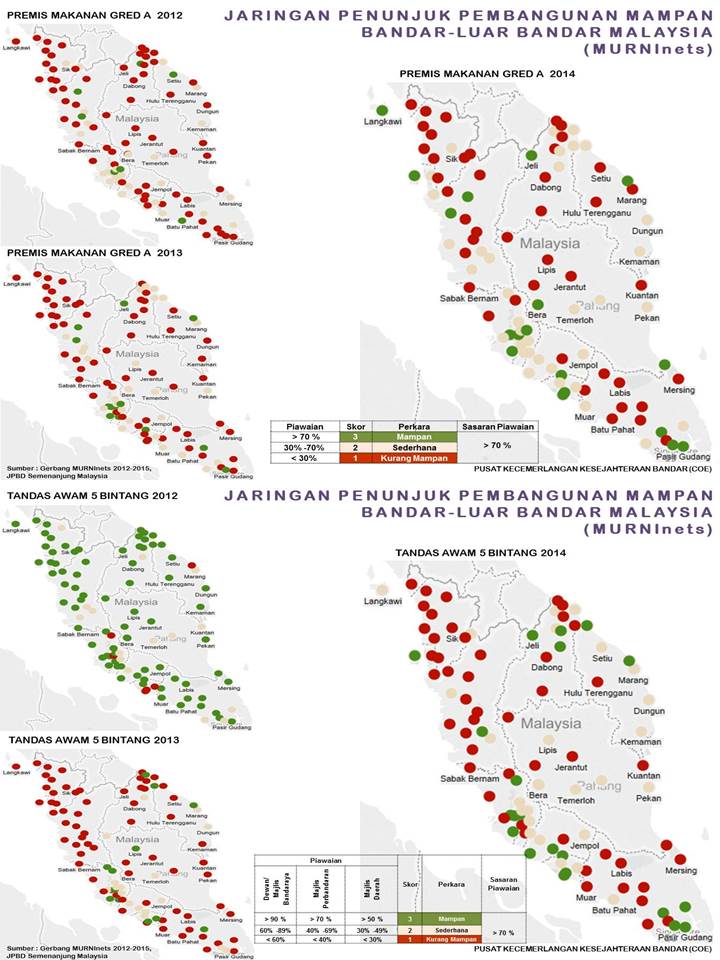
MURNInets


Federal Department of Town and Country Planning (FDTCP)  being the a focal point for Sustainable Development Indicators for Local Authorities through MALAYSIAN URBAN-RURAL NATIONAL INDICATORS NETWORK FOR SUSTAINABLE DEVELOPMENT (MURNInets). This is in line with the Department’s vision to be a “Leader in Town and Country Planning towards achieving a Quality and Sustainable Living Environment by 2020.


The evaluation of towns and cities performance towards achieving  sustainable development and wellbeing of the people can be done through the implementation of MURNInets which uses a set of indicators that reflects their sustainability level through MURNInets. Its give a better reflection on the progress towards sustainable development in Malaysia. The role of local authorities is seen as crucial in planning for sustainability with a bottom up mechanism for support of the local authorities to ensure strategic plans; development control and enforcement are incoherent with the sustainability objectives. MURNInets can be monitored using the developed indices in a wider sense in terms of urban development and work as a guideline for urban managers towards sustainable cities.


MURNInets include 36 sets of compulsory indicators grouped under 21 themes under 6 dimensions. Most of the targets and standards for the selected indicators were adjusted according to hierarchy of local authorities. Based on SDG, 6 dimensions have been identified from which the 36 indicators have been derived. These dimensions are Competitive Economy, Environmental Quality, Sustainable Community, Optimum Use of Land & Natural Resources Efficient Transportation & Infrastructure and Effective Governance. The assessment of a sustainable city is always related to the selection of sustainable development indicators with a set of indicators to develop a sustainability index.


MURNInets shall give a better reflection on the progress towards sustainable development in Malaysia. MURNInets can be monitored using the developed indices in a wider sense in terms of urban development and work as a guideline for urban managers working towards attaining and maintaining sustainable cities. MURNInets has been recognised as a very important tool to measure sustainability of towns and cities in the country by the National Physical Planning Council  (NPPC) which is the highest authority on physical planning in Malaysia which is chaired by the Prime Minister of Malaysia.


Happiness Index in MURNInets


Happiness index is an indicator introduced under the quality of life theme to meet the current development trend that emphasises on the well-being of communities. A good physical environment provides the foundation for a well-ordered city conditions, that can cater for the physical and economic needs of the people. However such provision may not necessarily ensure a city is spiritually or socially sustainable. Most people tend to associate happiness with feeling good, that is, with a life that offers a variety of pleasures and comforts. Some tend to associate happiness with being able to do whatever they want to do, still others associate it with achieving everything they have set out to achieve in life. And such definitions of happiness could not be captured through quantitative measure of physical and environmental indicators. Hence the need for a qualitative procedure or method to derive at the Happiness Index as an indicator of Happiness level of the community to be included in the overall framework of MURNInets. Happiness Index Study is a primary data collection - survey carried out jointly between local authorities and residents. The aspects taken into account are the relationship of the individual with family, neighbourhood and environmental atmosphere, the interaction between people, the safety of the population, the level of health facilities and the level of local authority services in his/her respective areas.

PEOPLE AROUND ME..FAMILY AND FRIENDS.

PEOPLE AROUND ME..FAMILY AND FRIENDS.
To my Wife, Zulaini, my sons Zulazlan, Zulazman, Zulazmir, Zulazmin dan my daughter, Nuris Zulazlin...I love you all..thank you being with me

CIRCLE OF FRIENDS... KUALA LUMPUR PROJECT OFFICE

CIRCLE OF FRIENDS... KUALA LUMPUR PROJECT OFFICE
Thank you guys...for your support and encouragement

2007 / 2008 METHODOLOGY AND QUALITATIVE RESEARCH COURSE FOR PHD CANDIDATES

2007 / 2008 METHODOLOGY AND QUALITATIVE RESEARCH COURSE FOR PHD CANDIDATES
My new friends during my course in INTAN 9 Jan -2 Mac 2007

KUALA LUMPUR PROJECT OFFICE, JOURNEY TO MOUNT OF KINABALU SABAH 21-22 JANUARY 2006

KUALA LUMPUR PROJECT OFFICE, JOURNEY TO MOUNT OF KINABALU SABAH 21-22 JANUARY 2006
WE CAME, WE SAW, WE CONQUERED 4095.2 METER ABOVE SEA LEVEL

How are you, guys? Where you are now?

FOOD CLOCK