Tuesday, 31 January 2012

THE ROLE OF EFFICIENT URBAN GOVERNENCE TOWARDS A UNIFIED AND SEAMLESS PUBLIC TRANSPORT NETWORK

When discussing the issue of public transportation (urban, suburban, etc), the topic will always encapsulate the various modes of transportation that are either public or privately owned. When making comparisons between the two that provide almost similar services, the latter has always been considered as having the advantage by providing for example; door to door travel. In his view, in order for the public transportation services (particularly in urban areas) to gain the trust of the public, a seamless and integrated public transport network must be made available. To be ‘seamless’ is to provide almost door to door travel while being ‘integrated’ involves both tangible (such as planning) and intangible (such as sustainability) matters.

          The question of Malaysia’s public transportation system must be viewed as a matter of considerable urgency that needs to be addressed as soon as possible. As the country strengthens economically, its prosperity and population grows as well thus increasing the number of privately owned modes of transportation i.e. motorcycle, car, van, etc. Today’s traffic congestion (particularly in urban areas) is only temporarily alleviated by otherwise ad hoc and uncoordinated transportation centric projects (like highways) undertaken by various private and public bodies. In the meantime, the nation’s public transportation system bears the brunt of these projects that give would be users limited choices. the development of land especially in urban areas like KL must take into consideration the convenience of the general public. This is done by developing a ‘humane’ city where commuters of a seamless and integrated public transport network are given priority (instead of private vehicle users) in getting to their destinations without much difficulty.

       When touching on the inter relationship between land use and public transport, both aspects do complement each other. Public transport planning must not be done in isolation and should be highly integrated with land use planning/urban development. This is due to the fact that high population density has a direct impact on the capacity of the public transport network. Developing public transport in national strategies goes as far back as 1975 with the recent Ninth Malaysia Plan requiring an integrated and efficient public transport system as part of promoting sustainable human settlement development. Another example is the Principles of National Physical Plan (NPP) where it favours public transport over private vehicle use for inter-urban and intra-city movement. She had also mentioned that a land use planning tool called the Transit Oriented Development (TOD) is used for a mixed-use residential or commercial area designed to maximise access to public transport. This would entail public transport being located in the centre of a relatively high-density development area with progressively lower-density development spreading outwards from it. With regards to the ongoing land use in KL, TOD proposals are always included in its potential development. State Structure Plans (SP) and District Local Plans (LP) also include the need for public transport.

        From this point of view, there is a need to address certain matters in order to achieve the goal of a seamless and integrated public transport network:
a. A lack of clear ownership (as regulations and operations have different owners);
b. The need for an Integrated Transport Authority/Public Transport Commission;
c. Consolidation;
d. The implementation of plans already decided upon;
e. The need for enforcement;
f. Local authority involvement (public transport plans and budget allocation); and
g. Increasing local authority’s role in public transport planning to complement the Integrated Transport Authority/ Public Transport Commission

According a train/bus journey would entail three segments;
a. Access to Service (home to train station/bus stop);
b. Mainline Journey (using a train or bus to the next train station/bus stop); and
c. Connectivity for Dispersal (train station/bus stop to the work place)

         Presently, the overall timing when using the bus services within the Klang Valley (from urban to suburban destinations and visa versa) is between one to two hours. Bus stops are generally overlooked or play a less an important role when public transport planning is concerned. Bus transportation particularly bus stops can play an important role in providing a seamless and integrated public transport network. Examples of bus stops located in Curitiba in Brazil, Nantes and Strasbourg in France and Zurich in Switzerland shows the emphasis of comfortable and sheltered bus stops located very close to bus and train service routes. Accessibility between Malaysia rail and bus service routes leaves much to be desired. There is a need to be ‘people orientated’ when public transport planning is being carried out in Malaysia. The development in Malaysia always gave emphasis to vehicle routes, buildings and other utilities and left out the pedestrian factor i.e. walkways but this is gradually changing. It is estimated that around 2.5 million people commute in and out of KL on a working day. Around 50 to 70% of these commuters walk to their destinations for the last segment of their journey. The following in order to meet the goal for a seamless and integrated public transport network:
a. A shortened journey time;
b. Accessibility to service;
c. Minimising transfer between destinations;
d. Reduce waiting times;
e. A smooth dispersal flow at destination;
f. Affordable cost of travel; and
g. Common integrated ticketing system

The concentrate on the stagnation and progress being experienced in enhancing Malaysia’s public transport and how to move ahead in making it a reality. The goal of a seamless and integrated public transport network has been compounded by a number of significant problems being faced:
a. Poor planning of transport, services & development;
b. Uncoordinated and incomplete planning;
c. Lack of timely investment in public transportation;
d. Overcrowding and network breakdown;
e. KTM Crisis (a shortage of trains while the number of commuters grows);
f. Existing networks have significant missing links and are not properly integrated; and
g. Many options for services i.e. buses that are deemed unreliable, inaccessible and inconvenient for many

On the aspect of organisation and regulation, the significant problems faced are:
a. Lack of interest/authority/ability/willingness to enforce regulations;
b. Incomplete understanding of what public transport can offer to a community;
c. Focusing on the lower-income group that don’t necessarily take public transport;
d. Operator driven competition does not help the public transportation industry; and
e. Operators may sacrifice quality, service, mobility, safety, rights of workers, etc.

Progress has also been made in some areas such as the establishment of RAPID Penang where the number of users of the service is increasing. In order to meet the goal for a seamless and integrated public transport network:
a. Parliamentary Select Committee;
b. Public Land Transport Commission;
- introducing and maintaining National Standards
- integrated planning across Malaysia
c. Local/Regional Public Transport Authorities;
- Regional and Local Planning
- Control of routes, fares, assets
- Operators under contract to provide services
d. Encouraging and using public feedback

Friday, 20 January 2012

PREPARATION OF OPEN SPACE AND RECREATION AREA : 10 PERCENT OF DEVELOPMENT OR 2 HECTARES PER 1.000 POPULATION

Preparation and distribution of quality open space is important to create a liveable city. Open space shall be provided in accordance with the Guidelines for Open Space and Recreation by Federal Department of Town and Country Planning. Local Authority (LA) should ensure that open spaces can be planned and distributed provided at appropriate locations. Policy provides for ten percent  (10%) of public spaces for each development can only be proven if green spaces are provided at suitable locations and facilities can be enjoyed by all levels of the local community. Local Authorities should take efforts to proclaim the open space so that these areas are not converted to another type of use. Open space and recreational areas have been prepared also to be ensured so that it is clean, safe, functional and can be maintained from time to time. In the development of a residential area, open space facilities are an important facility for the convenience of the public.

Open space is an important aspect in residential, industrial and commercial development. Thereby,  Federal Department of Town and Country Planning has been enforcing the implementation of the provision of open space in land development . It has been amended from time to time as necessary. The Government is deeply concerned with the development of open spaces and green areas in the physical development of the country. The Government believes that the development of quality green spaces not only create a balance of green spaces and areas of development, but also improve the quality of a society. For these reasons the government has decided that the ratio of open space 10 percent of the development area used as an indicator of development areas. This compares with the current indicators of 2 hectares for every 1,000 population. In the property development sector, there are many parties who are directly involved in the role and commitment will contribute to ensure that development goals are to achieve the target. Government plays an important role in shaping the policies, laws, standards or guidelines of government policy, development plans as well as circulars and guidelines in general. This is a responsibility on behalf of the government in implementing, controlling and monitoring the development growth in order to meet the economic, social, political and technology.

This article outlines the basic relation to the definition, principles of planning and open space planning standards to be adhered to by developers. It is the intention of this article can drive the state authorities, local authorities and developers in planning, control and monitor the preparation and development of open space in an effective and sustainable. Although the relevant planning policies and standards of open space and recreation has been drafted and adopted, but many issues and problems in the preparation and development of open spaces still exist. Standards of open space provision of 10 per cent of the development area has been used by developers, local authorities and the State Department of Town and Country Planning. If this standard continues to apply the target in order to achieve developed nation status by 2020 will fail. Thus at the Meeting of National Physical Planning Council (NPPC) No. 1/2005 has been decided that the provision of open space should be in accordance with the target of 2 hectares of public open space per 1,000 population. Accordingly, this article will explore the suitability of current open space standards 10 percent of the development area. In addition, the target of 2 hectares of public open space per 1,000 population was also studied and interpreted the literature review to see the benefits of this target to developers, local authorities and public.

Futher enquiry about this article kindly contact :

DR. AZMIZAM ABDUL RASHID
 Research and Development Division,
 Federal Department of Town and Country Planning,
 Ministry of Housing and Local Government,
 Unit No. 50-12-2B, & 50-13-1, Wisma UOA Damansara,
 No. 50, Jalan Dungun, Damansara Heights,
 50490 Kuala Lumpur,
 Malaysia
 email address : mailto:bpp@townplan.gov.my

Saturday, 14 January 2012

THE GLOBAL PERSPECTIVE ON THE ROLE OF URBAN GOVERNANCE IN SUSTAINABILITY CITIES


More than half of today’s global population currently resides in urban areas and this figure is growing. This means that any credible call for sustainable development on a global level must involve urban areas – a fact that finds expression in the concept of sustainable cities. Governing urban areas in a sustainable manner is, however, fraught with contradictions and dilemmas. The keys to understanding these difficulties, we argue, are to be found in the interpretation of good governance and sustainability and in their inherent contradictions. For the last two decades, the Urban Governance agenda has been based on ideas of democratic, decentralized, localized community and participatory approaches, most of which emanate from a development discourse and from experiences in rural and/or semi-rural areas. Sustainability is, ultimately, a global term – especially in the era of global climate change – and it may extend beyond the scope of urban government. Hence, urban areas – and in particular the emerging mega-cities that seem to be becoming an increasingly dominant sign of contemporary urban political economy – do not easily harmonize with either of these processes.
 
On the contrary, these areas are designed to be the nexuses of various kinds of flow – rural-urban; domestic-global – and they seem ill-suited to territorial decentralization and/or participatory local democracy. Moreover, major cities, which harbour vast numbers of  high-consuming inhabitants in a limited space, are typically the sites of unsustainable processes that exact a price from surrounding areas (ultimately the globe). So, major cities are often not amenable to established governance practices and they often fail to follow basic principles of sustainability. This paper aims to scrutinize the dilemmas involved in governing sustainable cities, and it offers a suggestion for how the challenge might be addressed. In addition to presenting a review of the literature, we will briefly explore some experiences gained from a number of pilot cases of sustainable cities and use these to illustrate the kind of dilemmas involved and to suggest possible solutions.

Finally, we present a discussion about what may be the most appropriate future agendas for research and development agencies alike. One of the questions that is often raised is whether participatory governance is likely to benefit or jeopardize democracy. The failure of representative democracy to govern complex cities and to solve current problems is frequently pointed out. The idea of grassroots democracy and participatory democracy may simply represent the interests of groups with good resources and organizational strengths and may be pushed through at the expense of the common good. From this perspective, participatory governance implies a risk of pseudo-democratic elites with special interests gaining dominance (Raymond 2002:183). Also the increasing complexity of knowledge-based society is used as an argument that elected elites are and should be responsible for representing the public good and they should not be led by the uninformed masses.

On the other hand, successful city management must be concerned with democratic renewal as well as with management innovation and ideally participation transforms citizens who have hitherto pursued selfish interests into responsible citizens who are focused on the public good . Many local authorities in a number of countries have also introduced various forms of area based decision making to increase the participation in planning and budgeting processes. Ward committees in South Africa are one example. The Local Agenda 21 programme was set up on the basis of participatory procedures. Local processes have no decision making authority, but can offer advice to the representative bodies with whom responsibility for making fiscal decisions rest. Within such processes, a high value is placed on incorporating marginalized groups such as youth and women.

When urban governance is successful in mobilizing the necessary support and getting local decision-making structures in place, outcomes - in urban areas – may still fail to yield higher technical standards of governance due to the urban areas’ increasingly complex and interconnected nature. Moreover, even if we accept urban as a partial success (for now) in terms of participation, there is no evidence that sustainable development practices are being pursued or that such policies as are being pursued actually foster sustainable development on a global scale. Instead, we need a locally grounded process that operates not on the basis of voluntary engagement or temporary enthusiasm but within a clear framework that is set at the national level, anchored in the legal system and developed in policy. Such a framework should in turn be in concert with international imperatives and should be outlined in research and at major conferences and UN conventions.

Hence, we need to look for the quality of the local processes, and in this, three links require further attention: i) deepened local government-to-people relations in order to ground any process and establish local advocates; ii) better local government-central government relations so that the local can operate freely, but still within the limitations determined by the central state; and, iii) central government should develop a proactive stance towards global sustainability through engagement in international negotiations and standard setting. Neither the local nor the centre can solve these sorts of problems without the support of the other. Hence, the interaction between the local and the centre is crucial and it is imperative that views are shared about who should do what and with which methods.

Saturday, 7 January 2012

THE ROLE OF GOVERNMENT TO INTEGRATE THE PUBLIC TRANSPORT NETWORK IN MALAYSIA’S CITIES

The government is acutely aware of the serious short comings of the country’s public transportation system. Only 16% of residents in the Klang Valley use public transportation where as the majority uses personal transportation. This is due to the fact that the ratio of rail track to population size is just 19km per a million of population, that covers only certain parts of Klang Valley. Klang Valley’s three existing rail systems and stage buses are already overcrowded with 260,000 commuters during morning rush hour. A special task force headed by the Ministry of Transport has already been set up to make the Klang Valley publictransportation system more attractive. The taskforce’s goal is to increase the number of users from 16%to 25% by 2012. Urban areas with high population density such as Penang and Johor Bahru are also being targeted with a similar drive but with yet-to-be-mentioned timeframes. The government’s goal is create a world class public transportation system through enhancing its service, capacity, coverage and connectivity. Special emphasise will be given to rail transportation as the backbone to planned improvement of urban public transportation. Initial moves by the government is already underway with the planned purchase of 10 sets of electric multiple units (EMU) for Keretapi Tanah Melayu and 10 new trains for Kelana Jaya’s Light Rail Transport (LRT) line. The existing LRT lines will also be extended to 32km of track per million of population by 2012. Outside of the Klang Valley, certain segments of the ongoing electric double tracking project for KTM are nearing completion.

Sunday, 1 January 2012

WHY MEASURE HAPPINESS AND WELLBEING IN THE CITIES?

More than half of the world’s population is living in cities and urban areas and this is predicted to rise to 70% in 2050. The scale of city growth presents new social, economic and environmental challenges for those who live, work and does business in them. Safety and security, public health, a sense of belonging are just a few of the factors that contribute to the happiness for urban citizens and well-being across the world. How do we create a city for its people and who are the parties that need to come together to do this? Which long-term visions as well as simple next steps can they develop in the face of rapid urbanization? Are we happy with our quality of life? The need to develop and implement systematic measures of wellbeing has become an international priority, largely because of the increasing focus on sustainable develop­ment. For example, in June 2007, the Organization for Economic Co-operation and De­velopment (OECD), the European Commission, the World Bank, the United Nations and the Organization of the Islamic Conference issued a joint proclamation that focused on the fundamental importance of developing new and expanded measurements of prog­ress.

The proclamation affirmed the organization’s…“commitment to measuring and fostering progress of societies in all their dimensions and to supporting initiatives at the country level. We urge statistical offices, public and private organizations, and academic experts to work alongside representatives of their communities to produce high-quality facts-based information that can be used by all of society to form a shared view of soci­etal well-being and its evolution over time. We invite both public and private organiza­tions to contribute to this ambitious effort to foster the world’s progress and we wel­come initiatives at the local, regional, national and international level.” The notion of well-being is also central to our conceptions of health and healthy com­munities. For example, the definition of health that is used by the World Health Organi­zation gives primacy to wellbeing - “Health is a state of complete physical, mental and social well-being, and not merely the absence of disease or infirmity.”

Most definitions of well-being have emphasized the notion of living a happy and sat­isfying life. In recent years, this notion has become the primary theme in the measure­ment of the concept - self-reported happiness and life-satisfaction.  GDP seems to be growing, but most people feel that the quality of life has become a rat race. The GDP as a concept does not measure or under-count what households and civil society produce. They certainly do not incorporate any measure of inequalities, since the average per capita GDP can disguise the sense of growing disparity. Most of all, GDP statistics do not measure at all environmental degradation or the decay of physical infrastructure around us. Nevertheless, as governments and companies prepare for the recovery, it is more timely than ever to think beyond GDP (gross domestic product), namely not the quantity of how much we produce or consume, but its quality.

Thus a new metric of human well-being should capture these dimensions economic and job security, health, education, personal and work environment, a sense of equality and respect, connectivity with family and friends, a pleasant natural environment, and physical security.In many parts of Asia, we are struggling with crumbling social infrastructure, overcrowding, environmental pollution and social disquiet. Social injustice is being expressed even in very wealthy and successful Asian cities. This month, we were stunned by the random and violent shooting of politicians and the crowd in Arizona. All of a sudden, we are reminded that in addition to our material living standards, such as income, most of us care a lot about our personal and physical security. What can governments and civil societies do? The Stiglitz Report is a very useful reminder that we should begin by measuring what people care about, not just in terms of the quantity of production or consumption, but the quality of well-being.T he report reminds us that GDP is a very narrow concept and does not measure many qualitative issues that human beings care about.

As Asia is going through rapid changes in demographics, urbanisation and social change, it is not surprising that the metrics that we are using to measure our economic success or failure is not up-to-date. It is as if we are driving a car whose speedometer shows that we are accelerating at 70 miles per hour, but there is no indication that we may be going into a bad neighbourhood or that the car may be falling apart. Indeed, if we focus on speed, we may neglect the direction that we are heading towards. Speed comes before a crash. Globalisation has created huge opportunities as well as threats. Governments need to appreciate that in the global competition for talent, people can easily walk with their feet. But they will not walk if they love the city or country-side they live in. We all want a sense of liveability clean air, good health, great culture, nice people, no fear of physical security. Well-being is a sense of community that people care for each other, a feeling of being more equal and mutual respect. We should not see strangers as another mugger, nor a policeman as a person to be feared. We want good governance in our society, most of all a caring community that looks after the poor, the weak and the under-privileged. As governments struggle with how to deliver better governance, we need to begin with better measures of social well-being than GDP.

Saturday, 17 December 2011

EFFICIENT URBAN GOVERNANCE: A WAY FORWARD TO HUMAN WELL-BEING

Urban governance is a very important factor for economic development, political and social. Things can be done through the role of central government, state and local. At the same time, this role is formed as a result of the cooperation of governments, private sector and NGOs to ensure that development in the economic, political, and social security. Progressive city does not only focus to economic development alone, but also good governance factors contribute to the smooth progress of development in a country and a social focal point. To establish good governance are several methods used, the involvement of all, responsible, honest, efficient, fair, Effective & Efficient, and systems in accordance with the rules. For example, Malaysia introduced the 9 th Malaysia plan that outlines several methods for establishing good governance, the national integrity plan that led to five things that anti-corruption, improve the delivery of information systems, corporate governance & business ethic, the family institution and the quality of life.

The 9th and 10th Malaysia Plan is the basis of the federal government can act to change the management system of governance that will be running smoothly and is believed by stakeholders. Therefore, we can see not only economic development but through a process of urban governance is actually able to develop a city and a focal point for socializing. This is due to a planned governance will have a positive impact in the development of some sectors for economic growth, such as industrial, telecommunications, shopping malls, education, health, business, administrative and transportation center. This is an important facility to help improve the city's economic growth and help improve the quality of life.

The nearest example we can see is the city of Kuala Lumpur with a variety of equipment and facilities of a sophisticated system established by the local government for social focus to meet their needs and requirements. Indirectly when upgrading occurs, then we will find that the entry or migration of the population will increase because of the career opportunities and facilities for their comfort and quality, the role of central government policy managed by the state and implemented by local governments. If we look at career opportunities is one form that can create the culture and lifestyles of our diverse communities. When development in a town that implemented by local governments with the developer of the project, it will be of cultural assimilation. Income of the population will increase and this can change their lifestyles. Indirectly, it can help in the economic growth of a city.

In the aspects of health, the role of the federal government to ensure a lifetime of life through the RMK-9 has to be more proactive as a result of cooperation of the private sector and NGOs. Government has ensured that health law and medical facility equipment such as screening for the disease, early diagnosis. Increase preventive vaccines for diseases such as influenza B, measles and Rubella. These plan also provides provisions for adding new hospitals and renovation and upgrading of existing hospitals. This role is highlighted in order to benefit the city's drive towards a more robust economic growth on the efforts of good health governance in order to produce a community with high quality and standard of living can contribute to accelerate the growth of the urban economy.

The development of good health will form the entry and social focus of the city has the ability level of comprehensive health services. The place is in the Crown Medical Center Hospital of focus people in Indonesia, Singapore and domestic use such services. Melaka's economic growth is also based on the development of the role of health and good governance. Development of education in a city also influence factors of good governance and the social focal point. This can be seen around town in Kuala Lumpur, which has 100 centers of higher education and private sectors. Higher education ministry's policy role that Malaysia would like to upgrade the university to the University of Premier and International by bringing in foreign students from foreign countries such as Yemeni, Nigeria, Pakistan, Iran, Iraq, China, Laos and Japan. University located in the center of Kuala Lumpur has received a lot of foreigners to improve the quality of education at the international level.
The role of local authorities such as City Hall through higher economic growth through the "Kuala Lumpur City Plan 2020, identified that the mall has a good potential to the economic and social growth as the standard of living of the rising. City Hall has given a number of shopping division is the main shopping precinct such as KLCC, Berjaya Times Square, Pavilion, Mid Valley, Garden City and the River Fund. The main sub areas such as Jalan Tuanku Abdul Rahman, Chow Kit Road, Petaling Jaya and Jalan Pasar. This growth will be the center of local and international social growth in the form of recreation and entertainment and a wide range of job opportunities. Good urban governance, the role of all parties such as government, private sector and NGOs is needed to further promote economic and social growth that a city can be developed rapidly in terms of infrastructure, education, health, and tourism.

Urban Governance & Disabled People

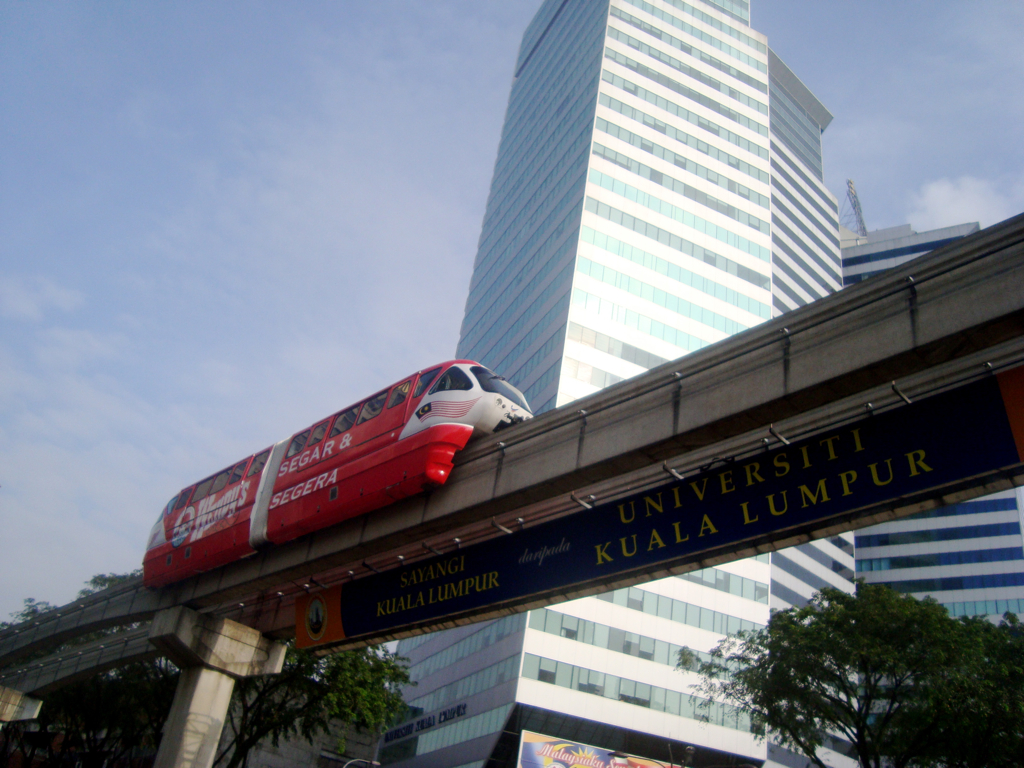
In the aspect of public transport system is actually able to ensure the efficient activity in the country. Public transport is also the heart of the development of a country. If we look at developed countries like Japan and the United States, we can see how a well-developed efficient public transportation system. See also how our public transport system developed today than ten years ago. Now in Malaysia there is the Light Transportation System (LRT) and Monorail a lot of help in our public transport services today. However , what means all this progress should not be shared with those who are not able to enjoy it.

The group that is none other than the class of persons with disabilities (PWDs). According to the Disabled Persons Act 2007, "Persons with Disabilities" (disabled) means "People who have long term physical, mental, intellectual or sensory impairments which in interaction with various barriers may hinder their full and effective participation in society". According to statistics provided by the Department of Social Welfare of the number of registered people with disabilities has increased by 12 percent in 2007 (220.250 people) compared to 2006 (197.519 people).

Groups of disabled people in wheelchairs, was a priority in public transport facilities. They needed a mechanism that can move as well as in relation to the outside world and the public. Imagine if they did not have family members who were willing to take them out, can they move or enjoy the world. Can they ride the LRT or commuter our cutting-edge? We are air-conditioned bus with comfortable seats that are hovering in the city and grand taxis either normal or a luxury? If they use public transport, most likely they are injured and may be dangerous for their lives or they may not be used directly due to obstruction from the use of a wheelchair.

There is no doubt that there are efforts from companies that provide public transport facilities to ensure that disabled-friendly services. There are buses that putting a wheel chair to show they are disabled-friendly buses. But today we can see that it is not perfect, marks his wheelchair just decorative. However, good faith efforts and the bus companies should be emulated, but its effectiveness should be reviewed. Is it because our society or the operators themselves? However, efforts should be made step by step. when viewed between public transport services in our country and countries like the United States, is still too much effort should be enhanced.
Social Welfare Department has always encouraged transport companies to provide fare concessions to people with disabilities. To date there are several transportation companies have been providing incentives to encourage transport to disabled people. Among them are Malaysia Airlines (MAS) to provide low-cost up to 50% for domestic flights, Malayan Railway (KTM) to provide concessionary fares up to 50% of all trips for all classes, transnational bus company provides 50% of concession fares and Rapid KL provides free air fares to the disabled.

According to a study conducted by the Department of Social Welfare, public transport is urgently needed by the disabled is a public vehicle that could deliver them from the point of origin to destination, for example taxi service can help them socialize and work. In 2002 there were 72.361 of taxis in Malaysia.

Unfortunately most of the taxis in our country is not the type of disabled-friendly. Sometimes they do not want to take disabled passengers because it is inconvenient but they are also a handful of to taxi driver who was kind enough to take wheelchair clients. Sometimes because of the taxi they use Proton Iswara example cause they do not want passengers in a wheelchair because of boot capacity. If the view is now different types and forms of taxis we see in the streets. Luxury cars are also made by some of the taxi fare was less than the normal taxi, with reasons for a convenient to passengers.

Unfortunately compared to the amount of money invested to buy luxury cars for executive taxi is more appropriate if the money used to buy or renovate a normal taxi wheelchair accessible (wheelchair Accessible Taxi) as found in the United Kingdom and the United States. Concerns of the taxi company operator will help the disabled who use wheelchairs. In addition there are some taxi drivers who feel the disabled is difficult. This behavior may occur due to lack of concern by the public transport operators themselves. This depends on the attitude of the driver that the passenger feels very cumbersome wheelchair for example that disabled people in wheelchairs do need others to help them enter into the wheelchair into the boot of their car..

But some, taxi drivers felt the disabled will only cause problems for them. There is also a wheelchair passenger feels inconvenience and delay. Most taxi drivers racing against time. For those with more time they have, the more passengers they can take. Particularly in the Klang Valley, the majority of taxi use NGV as fuel gas for cheaper than petrol. The gas tank or container installed in the car bonnet, given the relatively large size of the tank so there is no space to include a wheelchair.

In an effort to help the disabled, the public transport operators and government must work together in a effort to help those less fortunate this. Besides, it also can make our country a country concerned and caring. Consequently, the operators also need to see that public transport services as a social responsibility, not only concerned with bottom-line profitability. As members of society do we need to understand the needs of disabled people. It is not appropriate for us to isolate and segregate them because of the lack of it has. There are also some less responsible members of society and selfish to use the facilities provided for disabled people, for example car parks, toilets and seating.

For example, the CEO of AirAsia, which Dato'Tony Fernandes he improve aviation services after receiving protests from disabled associations due to AirAsia's services are not disabled-friendly. In a very short time he was improving services to disabled-friendly AirAsia despite huge cost. This attitude should be an example to us all. This shows a view of disabled people taken care of and respected even if there is a lack in them. Be a responsible member of society help those with disabilities. Together we build towards the social well-being of society.

Thursday, 15 December 2011

CORE 6: EFFECTIVE URBAN GOVERNANCE UNDER NATIONAL URBANIZATION POLICY (NUP)

NUP 27

INSTITUTIONAL CAPACITY BE STRENGTHENED TO IMPLEMENT THE URBAN ADMINISTRATION AND MANAGEMENT MORE EFFICIENT AND EFFECTIVE

a. Restructure the institutions of urban management organizations

b. Increasing employment in all levels of local authorities include improving the technical staff of the management team and professionals

c. Referring to the benchmark and adjust the developed countries in order to determine the number of employment professionals

d. Expanding services at the local government to enable job rotation, more opportunities for promotion and transfer of officers of local authorities in the same country

e. Review and coordinate the relevant legislation the administration and urban management

f. Entered the planning of a comprehensive human resource development, including job rotation, 'job enrichment', promotion opportunities and provide ongoing training to enhance the capacity, capability and staff expertise

g. Establish a special training institutions for urban management

h. Provide leadership and management of a dynamic, robust and good performance capabilities

i. Identify new revenue sources and improve financial management

j. Implement asset management more efficient and systematic manner to ensure quality of service and extend the life span of equipment

k. Streamline regulations and procedures related to planning approval and land use

l. Expedite approval of development

m. Using information and communications technology to improve management quality and improving the provision of services by implementing electronic systems such as e-licensing ',' e-assessment ',' e-Submission 'and

n. aking innovative approaches and methods to improve the effectiveness of the procedure, control is more flexible, broader community participation and use of latest technology

NUP 28
THE PRACTICE OF GOOD CORPORATE GOVERNANCE TO PROMOTE AN OPEN MANAGEMENT CULTURE, INTEGRITY AND RESPONSIBILITY

a. Applying the principles of corporate governance in the administration

b. Implement programs Islam Hadhari

c. National Integrity Plan (PIN)

d. Reduce bureaucracy

e. Running an efficient and strict monitoring

f. Improve delivery systems

g. Implementing effective leadership and management

h. Applying transparency

i. Managing finance and resources wisely

j. Implement 'Key Performance Indicators'

k. Prepare and adopt a code of city governance for all local authorities

l. Practicing management and work culture based on knowledge

m. mproving institutions directly involved in community activities

NUP 29
ENCOURAGED COMMUNITY INVOLVEMENT IN PLANNING AND URBAN GOVERNANCE

a. Implement the "Local Agenda 21" in the process of preparing policies, strategies and action plans of sustainable development

b. Establish a division of the local authority for coordinating and managing programs to enhance participation of local communities

c. Ensure that all local authorities established the public relations unit

d. Federal and state governments provide funding for managing Comunity Involvement Program

e. Facilitate the public to obtain information relating to planning and urban governance

f. Increasing public awareness of the cultural aspects of design and maintenance

g. Encourage community participation, private and BBK in development planning and managing the urban environment

h. JKKK move and encourage the formation of residents' associations and Neighbourhood Watch

i. Encourage private companies and NGOs to contribute to the development of community facilities

NUP 30
USE OF INNOVATIVE TECHNOLOGY IN THE DESIGN, DEVELOPMENT AND MANAGEMENT OF URBAN SERVICES

a. Develop and use innovative technology in the planning, provision of infrastructure and utilities, and management of urban services

b. Using information and communication technology efficiently to enhance the performance of administrative services and information dissemination to the public

c. Adopt technologies that reduce waste generation

d. Promoting environmentally friendly building with the concept of 'green building' and the efficient use of energy

e. Using renewable energy resources efficiently

Sunday, 11 December 2011

NATIONAL URBANISATION POLICY : TOWARDS MALAYSIA URBAN SUSTAINABILITY

Introduction
The necessity of preparing the National Urbanisation Policy was emphasised in the 8th and 9th Malaysia Plans. Its formulation is crucial to improve the effectiveness of urban service quality to create safe, systematic, modern and attractive cities. Provisions of Part IIB, Section 6B (3) of the Town and Country Planning Act (Act 172) which was amended in 2001 (Act A1129) also stated the need for the Director-General of Town and Country Planning to consider the national urbanisation policy or other similar policies in preparing the draft of the National Physical Plan.

The National Urbanisation Policy requires an action plan to execute the formulated policies. The Director-General of the Peninsular Malaysia Town and Country Planning Department is responsible for preparing and ensuring the implementation of the National Urbanisation Policy. The responsibility of implementing this policy must be shouldered together by various ministries, departments and agencies entrusted with urban planning, development and service management.

Collaboration is crucial to carry out measures which are the shared responsibility of the various ministries, departments and agencies. The agencies responsible for carrying out the policies and measures in the National Urbanisation Policy must convert the policies into their respective programmes and projects. The proposed programmes and projects will have financial implications which need to be absorbed by various implementing agencies and made the basis for the annual budget and the five-year Malaysia Plans. Monitoring of policy implementation and sufficient allocation are necessary to ensure the National Urbanisation Policy is effectively executed.

Philosophy

The formulation of urbanisation policies must be based on the philosophy of a peaceful city encompassing the following:

a. Generating economic growth for prosperity of the nation that can be shared and enjoyed by all

b. Providing quality urban services, public facilities, infrastructures and utilities for the comfort and well-being of the people

c. Emphasising on security

d. Ensuring the design and quality of urban fabric are founded on the local cultures

e. Focusing on environmental preservation and conservation

f. Promoting social development and national unity

g. Encouraging the residents’ involvement in the development of their respective communities through enhancing governance for greater efficiency and effectiveness

h. Eradicating urban poverty

i. Sensitivity and innovation where it concerns technological development and advancement

Aim

Urban development must be steered towards the creation of an environment that offers peaceful community living, which requires equilibrium in physical, economic, social and environmental development aspects. To achieve this, the formulation of the National Urbanisation Policy is based on the following objectives:

“To create a visionary city with a peaceful community and living environment through sustainable urban development”

Objectives

Based on the aim above, the following six objectives were identified:

a. To develop a planned, quality, progressive and sustainable city;

b. To develop and strengthen a competitive urban economy;

c. To create a conducive environment in order to encourage social development;

d. To eradicate urban poverty;

e. To strengthen the planning, implementation and monitoring system;

f. To strengthen urban management and administrative institutions

Saturday, 10 December 2011

BRIEFING TO SABAH'S LOCAL AUTHORITIES ON A REVIEW STUDY ON MURNINET, MURNINETS PORTAL AND HAPPINESS INDEX STUDY AT KOTA KINABALU 30 NOV - 2 DEC 2011


HAPPINESS INDEX : A NEW METRIC OF HUMAN WELL-BEING

Are we happy with our quality of life? GDP seems to be growing, but most people feel that the quality of life has become a rat race.In 2008, just as the financial crisis deepened, French President Sarkozy asked Nobel laureate Joseph Stigliz to form the Commission on the Measure of Economic Performance and Social Progress, comprising well known social thinkers and philosophers, such as Indian Nobel laureates Amartya Sen and Kenneth Arrow, Turkish economist Kemal Dervis, former World Bank chief economist Francois Bourguignon and other leading Western professors to come up with fresh thinking on measuring the quality of life.

The commission report came out in late 2008, but its important conclusions and messages were perhaps overshadowed by the financial crisis. Nevertheless, as governments and companies prepare for the recovery, it is more timely than ever to think beyond GDP (gross domestic product), namely not the quantity of how much we produce or consume, but its quality.It is interesting that a French President has commissioned such a study, not the British, American or Japanese. The French don't have the macho precision engineering of the German car nor Japanese technical perfection, but you know a French car when you see one for its individualistic and sometimes idiosyncratic design, but more for its comfortable ride.You only have to look at the way Asia has rushed head long at full speed on pushing growth to realise that this may not be what the new middle class (and indeed everyone) would be caring about.

I was impressed when one senior Asian professional economist started to talk about beauty and happiness as one measure of economic aspiration.The Stiglitz Commission started with the premise that GDP has increasingly become an inadequate measure to gauge the human sense of well-being over time in respect of its economic, environmental, and social dimensions, particularly sustainability.Thus a new metric of human well-being should capture these dimensions economic and job security, health, education, personal and work environment, a sense of equality and respect, connectivity with family and friends, a pleasant natural environment, and physical security.

There is of course a whole generation who seems to care more and more about Chanel handbags, iPhones, Chateau Lafite and all the icons of material wealth. Others are going into yoga, qigong or religion.There is the digital generation who communicate to their parents through Facebook, Youtube and Twitter, rather than talking face to face.Social change is happening when governments shake when SMSes start flying with news of another piece of social agitation. But the bulk of Asian society is still struggling with making ends meet.

In many parts of Asia, we are struggling with crumbling social infrastructure, overcrowding, environmental pollution and social disquiet.Social injustice is being expressed even in very wealthy and successful Asian cities.This month, we were stunned by the random and violent shooting of politicians and the crowd in Arizona. All of a sudden, we are reminded that in addition to our material living standards, such as income, most of us care a lot about our personal and physical security. What can governments and civil societies do? The Stiglitz Report is a very useful reminder that we should begin by measuring what people care about, not just in terms of the quantity of production or consumption, but the quality of well-being.

The report reminds us that GDP is a very narrow concept and does not measure many qualitative issues that human beings care about.For example, most people feel that official statistics, such as CPI, do not reflect their own perception of inflation. The GDP as a concept does not measure or under-count what households and civil society produce. They certainly do not incorporate any measure of inequalities, since the average per capita GDP can disguise the sense of growing disparity.

Most of all, GDP statistics do not measure at all environmental degradation or the decay of physical infrastructure around us. As Asia is going through rapid changes in demographics, urbanisation and social change, it is not surprising that the metrics that we are using to measure our economic success or failure is not up-to-date. It is as if we are driving a car whose speedometer shows that we are accelerating at 70 miles per hour, but there is no indication that we may be going into a bad neighbourhood or that the car may be falling apart.

Indeed, if we focus on speed, we may neglect the direction that we are heading towards. Speed comes before a crash. Globalisation has created huge opportunities as well as threats. Governments need to appreciate that in the global competition for talent, people can easily walk with their feet. But they will not walk if they love the city or country-side they live in. We all want a sense of liveability clean air, good health, great culture, nice people, no fear of physical security.

Well-being is a sense of community that people care for each other, a feeling of being more equal and mutual respect.We should not see strangers as another mugger, nor a policeman as a person to be feared.We want good governance in our society, most of all a caring community that looks after the poor, the weak and the under-privileged. As governments struggle with how to deliver better governance, we need to begin with better measures of social well-being than GDP. Unfortunately, the Stiglitz Report is only a beginning, by pointing out the weaknesses of GDP; but it has not operationalised how we arrive at a better measure. Now that Asia has reached the head table, one Asian government or statesperson should take the leadership of chairing a roundtable of statistical experts to arrive at a better measure of social well-being than just GDP.

Source: The Star written by Andrew Sheng, Jan 2011

Saturday, 3 December 2011

MY TASKS NEED TO BE COMPLETED BEFORE DECEMBER 2011

‎1 down (MURNInets in K.Kinabalu) but 9 more to go.. before end Dec 2011. These will keep me busy but TQ believe and support me until I complete it. The complete tasks list need to be completed are :

a. Meeting of Department Corporate Strategic for Research and Development Division FDTCP at Hotel Impiana Morib on 4-6 Dec 2011. Paper need to be presented are The Modus Operandi for National MURNInets Operation Centre & Happiness Index Study for MURNInets;

b. Meeting of Planning and Development Committee, Ministry of Housing and Local Goverment at Putrjaya on 6 Dec 2011. Paper will be presented  A Review Study on MURNInet and MURNInets Portal.

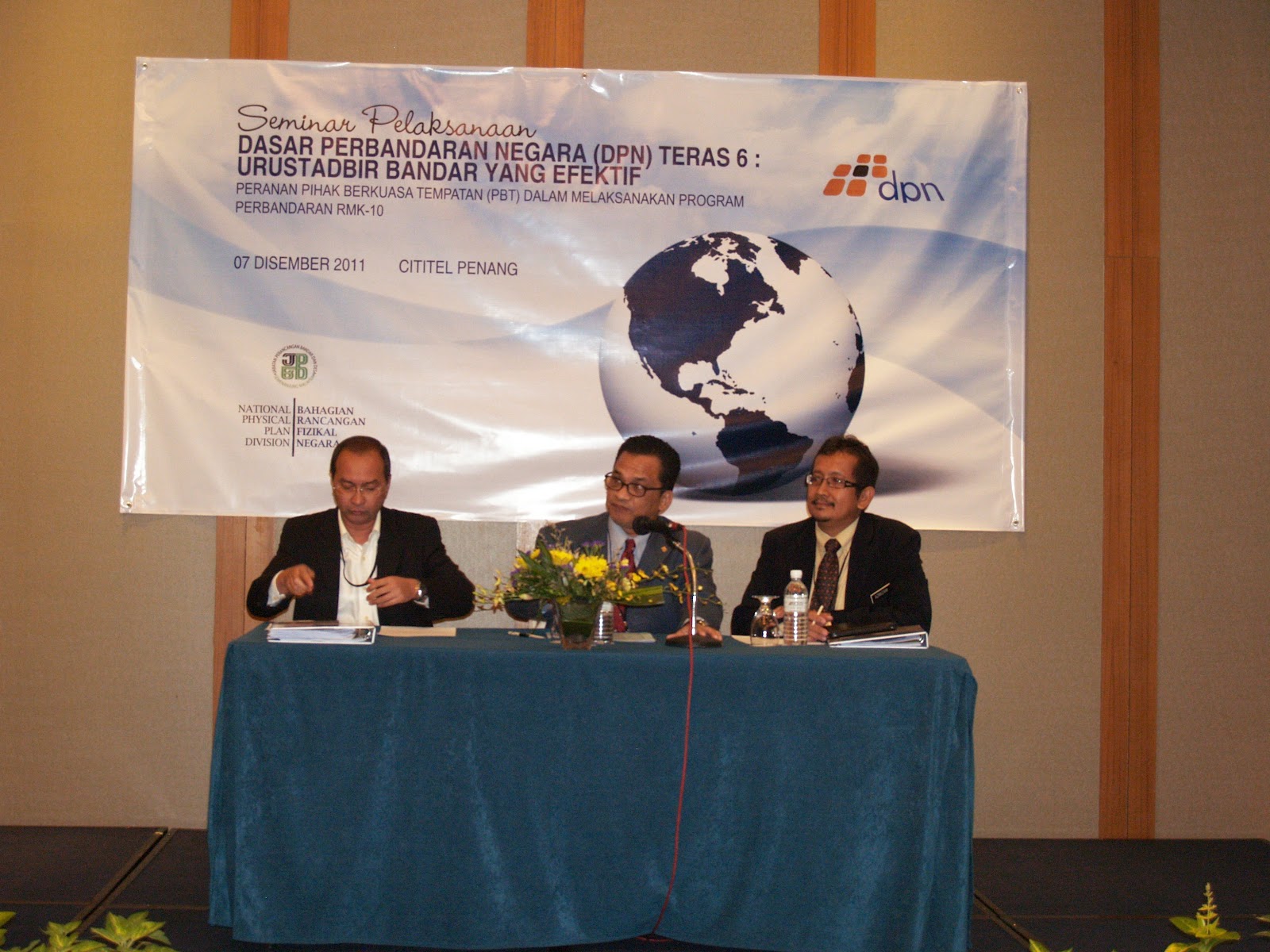
c. Seminar National Urbanization Policy : Trust 6 Effective Urban Governance at Cititel Penang at 7 Dec 2011. The seminar organised by National Physical Planning Division, FDTCP. Paper will be presented  Effective Urban Governance towards City Competitiveness.

d. Meeting of Planning and Development Committee, Federal Department of Town and Coutry Planning at FDTCP on 14 Dec 2011. Paper will be presented Planning Guideline for Open Space and Recreation and Environmental Sensivite Area (ESA) for Coastal Area.

e. Briefing to Sarawak's Local Authorities on a. A Review Study on MURNInet, b. MURNInets Portal and; c. Happiness Index Study for MURNInes in Sarawak at Kuching 16 Dec 2011.

g. Seminar on National Sustainable Development Indicators at Economy Planning Unit (EPU), Putrajaya on 19 dec 2011. Paper will be presented  A Review Study on MURNInet

f. Hands-On Nvivo 9.2 for MSIA at Wisma UOA Damansara Jalan Dungun on 21-23 Dec 2011

h. SPSS Data Analysis for Happiness Index Study: Case Study Kota Kinabalu and Kuching. The analysis  commence from 17 until 30 Dec 2011. The analysis will involve descriptive statistics and inferential statistics. Descriptive statistics are used to reveal patterns through the analysis of numeric data. Inferential statistics are used to draw conclusions and make predictions based on the analysis of numeric data.
 

PEOPLE AROUND ME..FAMILY AND FRIENDS.

PEOPLE AROUND ME..FAMILY AND FRIENDS.
To my Wife, Zulaini, my sons Zulazlan, Zulazman, Zulazmir, Zulazmin dan my daughter, Nuris Zulazlin...I love you all..thank you being with me

CIRCLE OF FRIENDS... KUALA LUMPUR PROJECT OFFICE

CIRCLE OF FRIENDS... KUALA LUMPUR PROJECT OFFICE
Thank you guys...for your support and encouragement

2007 / 2008 METHODOLOGY AND QUALITATIVE RESEARCH COURSE FOR PHD CANDIDATES

2007 / 2008 METHODOLOGY AND QUALITATIVE RESEARCH COURSE FOR PHD CANDIDATES
My new friends during my course in INTAN 9 Jan -2 Mac 2007

KUALA LUMPUR PROJECT OFFICE, JOURNEY TO MOUNT OF KINABALU SABAH 21-22 JANUARY 2006

KUALA LUMPUR PROJECT OFFICE, JOURNEY TO MOUNT OF KINABALU SABAH 21-22 JANUARY 2006
WE CAME, WE SAW, WE CONQUERED 4095.2 METER ABOVE SEA LEVEL

How are you, guys? Where you are now?

FOOD CLOCK